



Why doesn't copying another clinic's fee schedule work?
It's common to set fees by looking at what the clinic down the street charges, or at a fee schedule passed around among colleagues. It feels safe, but that schedule doesn't know your rent, your team, your lab or your appointment book. The same fee can be profitable at one clinic and lose money at another.
Fees that are too low fill the appointment book and empty the bank account: the clinic works hard and keeps little. High fees with no explanation stall treatment plans, which stay "under consideration" and never come back. In neither case is the number the only problem. The problem is not knowing where it comes from.
Pricing is a management decision with two ends: cost, which tells you the minimum a treatment has to charge, and perceived value, which tells you how much the patient believes it is worth paying.
Don't try to review everything at once. List the treatments your clinic performs most often and start with those: they weigh the most on each month's results.
What does it cost to run the clinic per chair hour?
Fixed costs, or overhead, are the ones that exist even when the appointment book is empty: rent, salaries, the accountant, software, electricity, equipment maintenance and the pay of whoever works in the chair. They don't belong to any specific treatment, but every treatment has to help cover them.
The simplest way to think about this is through time. The clinic has a certain number of chair hours a month, and each hour has to carry its share of overhead. A treatment that keeps the chair busy for longer carries a bigger share, even if it uses few materials.
- List the month's fixed costsincluding the owner's pay. If it's left out, the fee hides the salary of the person treating patients.
- Count your real chair hoursthe ones actually available for patient care, not counting breaks, meetings and time lost to no-shows.
- Record the actual time each treatment takesadding up every session, room setup, follow-up visits and adjustment appointments.
- Redo the math when your setup changesa new provider, an extra chair or a new lease changes the cost of each hour.
Chair time is the most overlooked factor. A treatment that is "cheap to do" can turn out expensive if it needs several sessions and follow-up visits that weren't built into the fee.
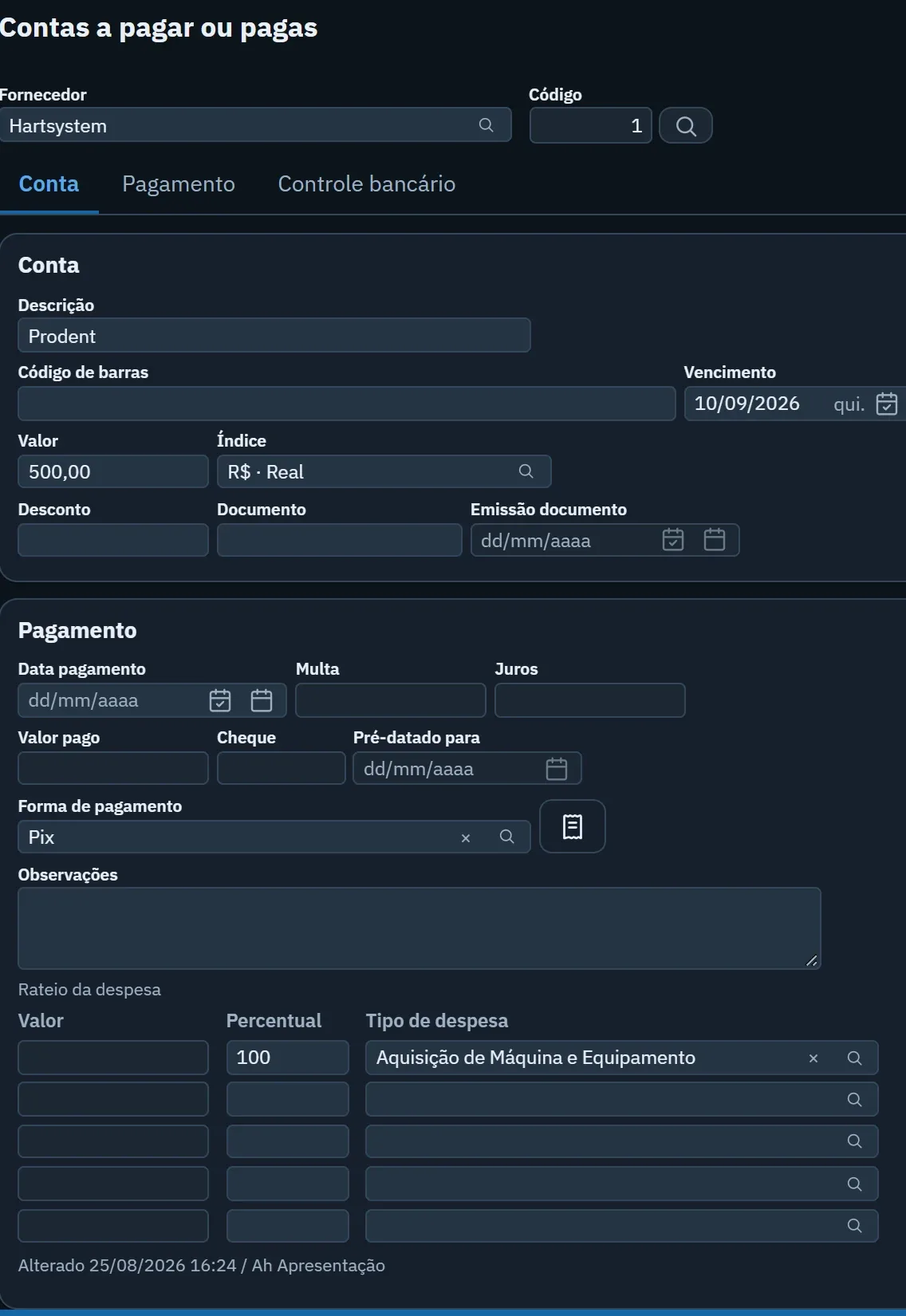
Know where the clinic's money goes. We'll show you how Pro365 GO, the new ProDent, records every bill with supplier, due date and expense type.
Schedule a demoWhat goes into the variable costs of each treatment?
Variable costs only exist when the treatment is performed. They vary from one procedure to another, which is why they need to be reviewed treatment by treatment:
- Consumables: composites, anesthetics, disposables, sterilization supplies and everything else used during the session.
- Lab work and prosthetics: crowns, splints, appliances and pieces made outside the clinic, including remakes.
- Commissions: when the provider receives a share of the treatment they performed.
- Payment processing fees: cards and payment plans have a cost, and it grows with the number of installments.
- Taxes on services: your accountant can help you see how much they weigh on each treatment.
These costs go up without warning. A price increase from the lab or the supply vendor can turn a profitable treatment into one that barely pays for itself, and nobody notices as long as the fee stays the same.
Take the latest supply purchases and lab invoices for a common treatment and check whether the current fee still covers everything. Recording every expense with a category, as the financial management guide explains, makes this check quick.
How does perceived value factor into the fee?
Cost tells you the minimum. But patients don't buy cost: they buy the result they expect to get. Two treatments with the same cost can have different fees, because patients see different value in them.
A few factors weigh on perceived value:
- How the case is explained: patients who see their own dental chart on screen and understand what will be done and why place more value on the treatment.
- The experience at the clinic: punctuality, appointment confirmations, comfort and a front desk that knows the patient.
- Follow-up: scheduled check-ups and care after treatment show that the clinic doesn't disappear once it gets paid.
- The provider's specialty and experience: more complex treatments require more training and carry more responsibility.
Competing on price alone is an endless race. There will always be someone cheaper. Competing on value means explaining well, and that is a skill you can learn.
Before lowering a fee because "treatment plans aren't being accepted," review how they are presented. The guide to treatment plans and estimates shows how to explain the case and follow up until the patient decides.
How do you offer discounts and payment plans without losing margin?
Discounts and payment plans help patients decide. The problem starts when they are improvised: everyone on the team grants them differently, and a fee that was right stops covering costs.
- Put the discount rule in writing: who can grant it, how much and in what situations, such as prepayment or a full treatment plan accepted all at once.
- Remember that payment plans have a cost: card fees, money that takes longer to come in and a higher risk of late payments. Long payment plans call for more caution.
- Ask for a down payment on long treatments: it covers the materials and lab work the clinic pays for right at the start.
- Spell everything out in the treatment plan: discount, down payment, number of installments, due dates, late fees and interest, all accepted by the patient before treatment begins.
A discount that becomes the rule stops being a discount: it becomes the fee. If almost every treatment plan goes out with a discount, the problem lies in your fee schedule or in how you present it.
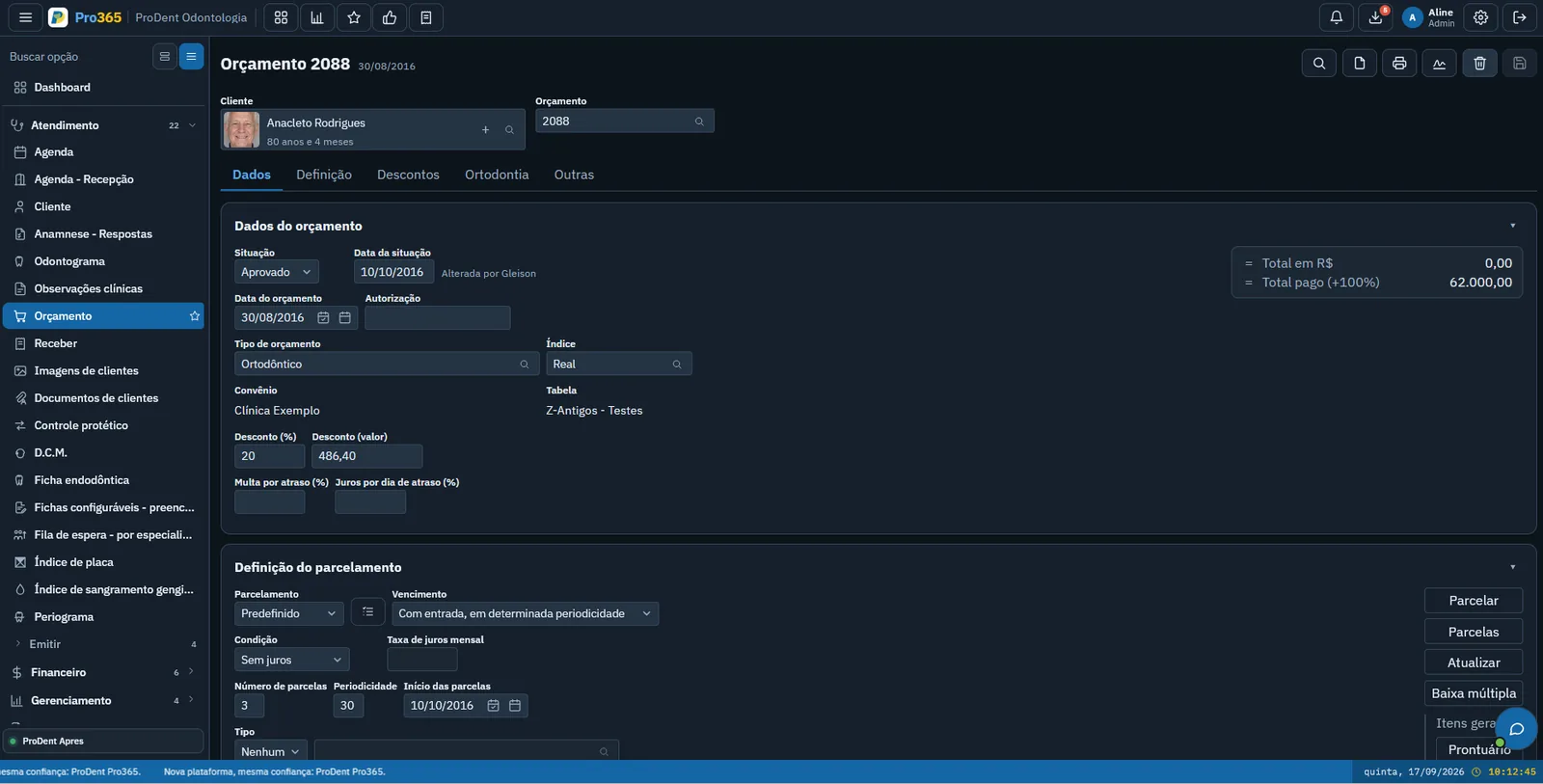
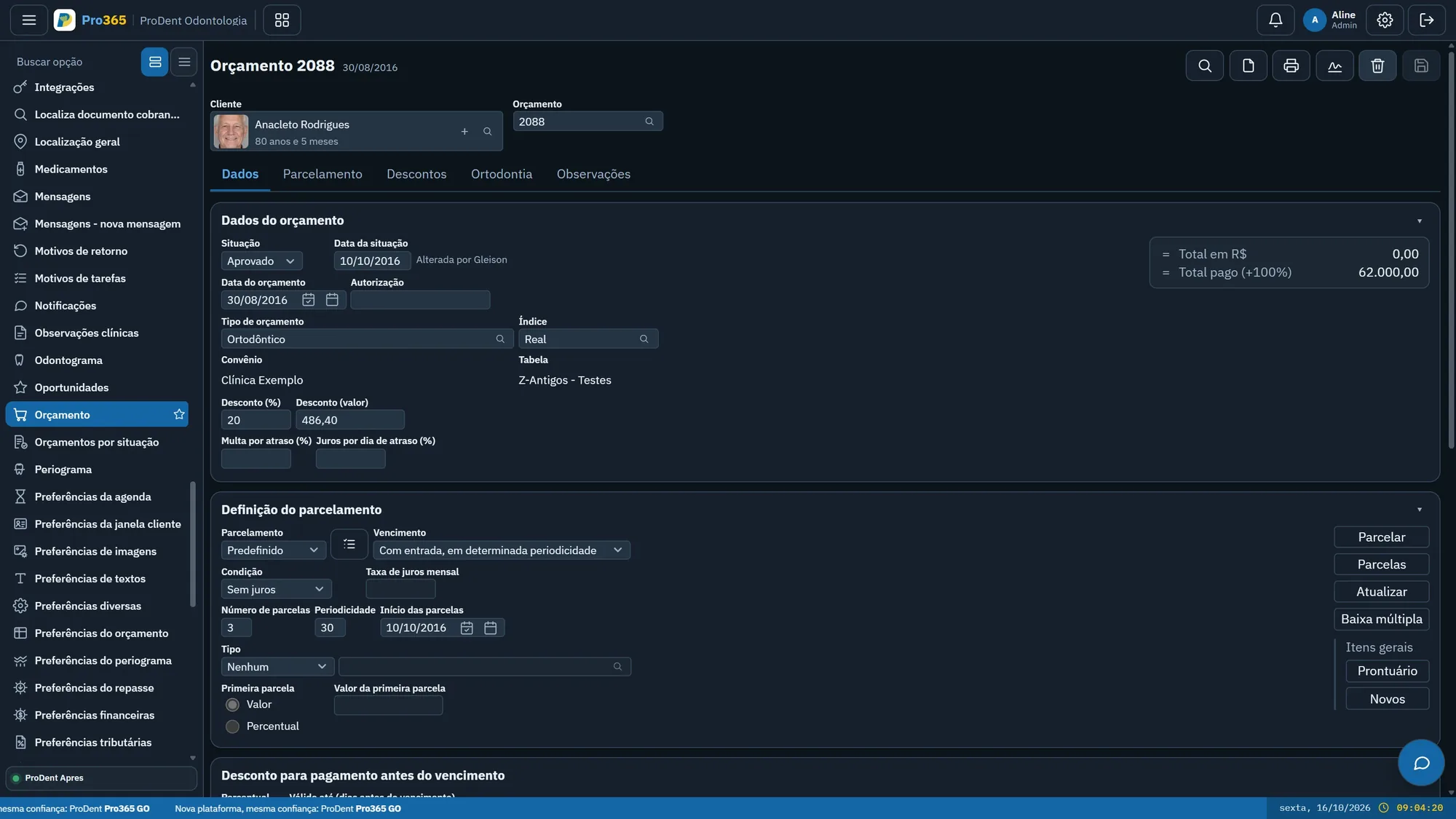
Discounts and installments set right in the treatment plan. See how, in Pro365 GO, the installments from an accepted treatment plan flow straight into the financial module.
Show me how it worksWhen should you review your fees?
Fees are not a once-and-for-all decision. Costs change, the appointment book changes and the clinic changes. If you never review your fees, you are unknowingly giving a discount that grows every year.
- Set a fixed dateat least once a year, ideally in a quiet month, well away from the end of the year.
- Review sooner if something changes a lota big increase in lab, supply or rent costs shouldn't wait.
- Look at the numbers before decidingcase acceptance, discounts granted and what's left after costs tell you where to adjust.
- Give advance notice and honor what was agreedtreatment plans already accepted keep the terms agreed with the patient.
Reviewing doesn't only mean raising fees. Sometimes a review shows that a treatment is priced too high for what it costs, and that lowering the fee increases demand without hurting results.
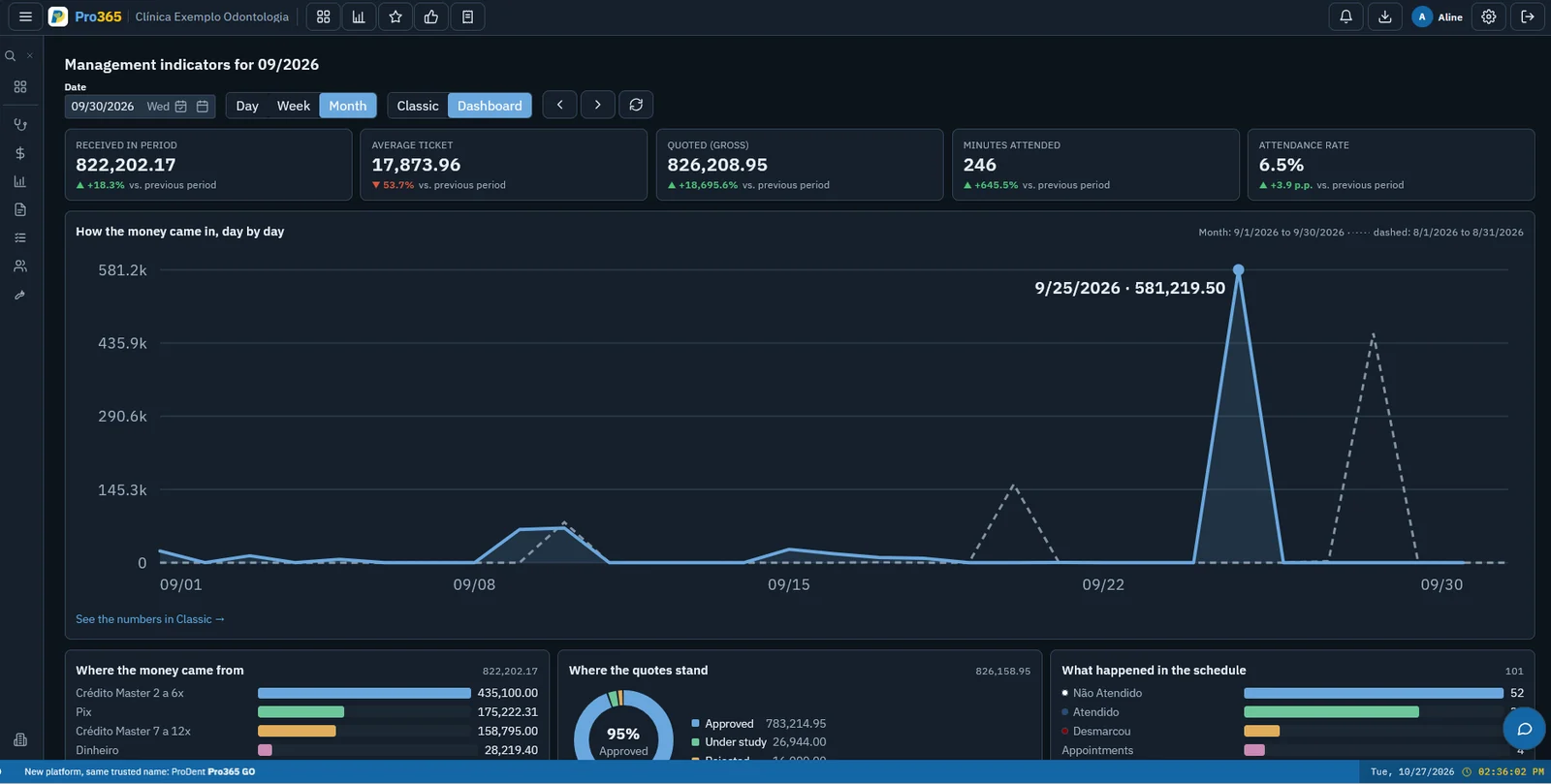
After a fee increase, track case acceptance for a few weeks. If it drops sharply, rework your presentation before rolling the fee back. The KPI guide shows how to track this number.