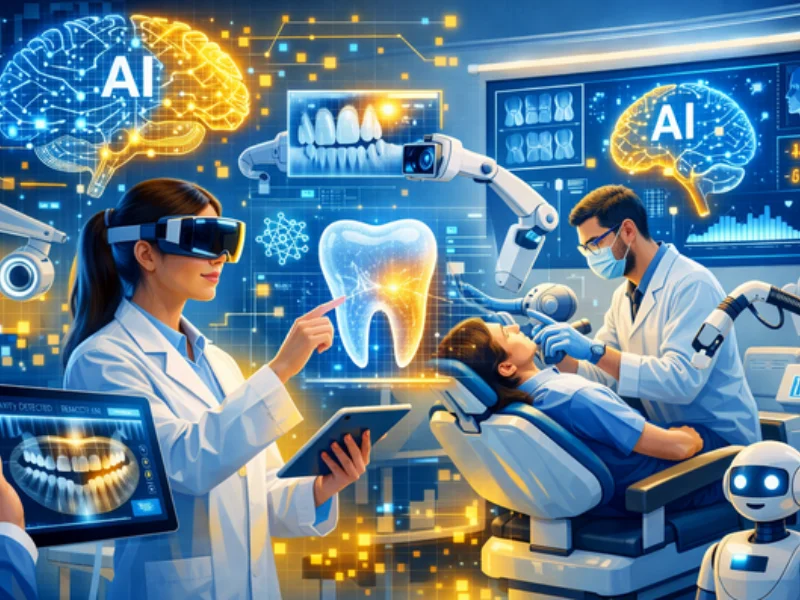
AI for dental clinics is already part of the day-to-day: it answers questions about your own data in seconds, guides the team through the system and supports automated reminders and confirmations. The real difference shows up when you compare an ordinary day with and without it.
For most clinics, the biggest problem isn't a lack of patients. It's a lack of organization, time and control. Every day, clinics deal with:
- a disorganized schedule
- appointments that never get confirmed
- missed chances to bring patients back
- little or no data analysis
- decisions based on guesswork
That's exactly where AI comes in.
What AI means inside a dental clinic
Artificial intelligence (AI) is the ability of software to analyze data and generate answers, suggestions or actions automatically. In a dental clinic, that means:
- automating tasks
- interpreting the clinic's data
- suggesting decisions
- making the team more efficient
It isn't about replacing people. It's about boosting results.
Where AI already shows up in the daily routine
AI is already working in several areas of the clinic, often without the owner noticing.
1. Real-time answers from your data
With AI built into your dental software, you can ask:
- how many patients were seen this week
- how many treatment plans are still open
- which specialty brought in the most revenue
And get the answer right away. This isn't theory: it already happens with tools like the Pro365 AI Consultant.
2. On-demand guidance for the team
AI can act as an instructor:
- explaining how to use the system
- teaching processes
- reducing dependence on support
The result is a more productive team, fewer mistakes and more autonomy.
3. Automated patient communication
AI and automation make it possible to send:
- reminders
- appointment confirmations
- automatic messages
This helps cut down on no-shows, reschedules and gaps in the schedule.
4. A better-organized patient flow
With AI and clinic software working together:
- digital intake forms are completed before the visit
- data is already filled in
- the patient record is organized automatically
This improves appointment time, the patient experience and data consistency.
A clinic without AI vs. a clinic with AI
Without AI
- manual processes
- little control
- decisions based on gut feeling
- an overloaded team
- time lost on repetitive tasks
With AI
- automated processes
- organized data
- strategic decisions
- a more productive team
- more time for patient care
How AI helps run the clinic
Financial organization
- money coming in and going out
- cash flow
- profitability
Team productivity
You can understand:
- who produces more
- where the bottlenecks are
- how to make better use of time
Data-driven decisions
This is the biggest impact. With AI:
- you see what's happening
- you understand what needs to improve
- you act with a strategy
Three everyday questions you can ask
Let's move from theory to practice.
Example 1: a quick question
"How many patients missed their appointment this month?"
An instant answer leads to immediate action.
Example 2: revenue analysis
"Which procedure generated the most revenue?"
The answer points to where growth can come from.
Example 3: schedule organization
The system identifies:
- idle slots
- peak times
That helps you fill the schedule better.
The day-to-day gains
- fewer errors
- higher productivity
- better organization
- more financial control
- a better patient experience
- more predictable growth
Starting early pays off
Clinics that use technology well tend to make better decisions, get more out of their data and automate processes, while others are still working on paper or spreadsheets.
AI in dentistry isn't something far off anymore. It's already built into modern clinic software and can be used today. Those who start earlier get organized sooner and build an advantage.
Pro365 GO, the new ProDent that runs 100% on the web, comes with Pro365 AI built in, so your team can ask questions about the clinic and get guidance without leaving the system. Book a demo to see how AI fits into your clinic's routine.