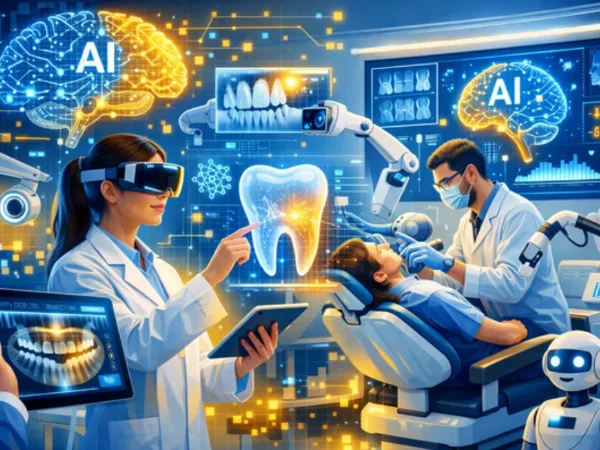

AI in dental clinic management helps owners and office managers get straight answers from their own data, without digging through reports. Instead of searching for numbers, you ask a question and get a reply based on what's actually happening in your clinic. That makes decisions faster and less dependent on gut feeling.
And this isn't only for large groups. Today, any clinic can use artificial intelligence to read its data, understand results and decide with more confidence.
The problem is that many managers still struggle to see what's really going on. The data exists, but it's scattered. Reports are available, but nobody has time to read them. So decisions end up following the routine, not a strategy.
That limits growth. McKinsey describes how leading companies are moving toward using data in almost every decision, and dental clinics are no exception.
What really gets in the way of strategic management
Before talking about the solution, it helps to name the problem. Most clinics don't struggle for lack of effort. They struggle with three things:
- trouble interpreting data
- too many operational tasks
- depending on support staff or outside help to get answers
As a result, important decisions get postponed or made without confidence. And here's the key point: how fast you decide affects how fast you grow.
Where AI fits into the daily routine
In day-to-day clinic, AI doesn't show up as something complicated. It actually makes things simpler.
In ProDent, Pro365 AI works as an assistant built into the system. You can call on it at any time to answer questions, guide you through a process or analyze your clinic's own data. It sits between you and the information in the system, so answers come back quickly and in context.
In other words, instead of looking for information, you just ask.
Ask anything and Pro365 AI answers on the spot
One of the biggest advantages of AI inside clinic software is the freedom to ask. No rigid reports, no screens that take a manual to read. You ask, the AI answers, right away.
For example, you can ask:
- How many patients did we see this week?
- What was our revenue this month?
- How many treatment plans are still open?
- What's our case acceptance rate?
Within seconds you have the answer, based on the real data in your system. No reports to run, no manual searching, no waiting on someone else.
What this changes in practice management
This kind of interaction makes a difference for three reasons:
- It removes the dependence on support to find information.
- It speeds up decision-making.
- Most of all, it brings the manager closer to the clinic's numbers.
You don't just use the system. You have a conversation with it. And once you start talking to your data, management shifts from operational to strategic.
More than automation: a new way to think about management
There's an important difference between automating tasks and using intelligence. Automation executes. Intelligence interprets.
With AI, you don't just complete actions in the system. You understand their impact. Instead of only logging appointments, you can analyze:
- patient volume by period
- financial performance
- opportunities that haven't converted
- growth trends
How it shows up in the clinic's day
The impact is immediate. The manager gets clarity, the team gets more autonomy and the clinic runs with more predictability.
AI cuts the time spent on analysis and frees up attention for strategic decisions. It also works as ongoing support: the Pro365 AI Instructor teaches the team how to use the system when they need it, which reduces mistakes and speeds up learning, while the Consultant helps answer questions about the clinic's data.
AI works best connected to the rest of the clinic
AI doesn't work in isolation. It becomes much more useful when it's connected to:
- smart scheduling
- financial management
- lead follow-up
- management KPIs
If you haven't built that foundation yet, start by learning how to make decisions based on your clinic's data.
Data without analysis is just numbers
One of the most common management mistakes is assuming that having data is enough. It isn't. Without interpretation, data doesn't lead to action.
AI addresses exactly that: it turns information into practical answers. That lets you act quickly, fix problems and catch opportunities that used to slip by.
Trend or necessity?
AI is already part of many areas of healthcare. PwC points to AI as a source of meaningful gains in operational efficiency and cost reduction.
In a dental clinic, that translates into:
- better use of the schedule
- higher productivity
- more confident decisions
- structured growth
So this is no longer just about innovation. It's about staying competitive.
The real benefits of AI for a dental clinic
When a clinic brings AI into its management, the gains are clear:
- faster data analysis
- fewer operational errors
- more autonomy for the team
- decisions based on information
- better control of the business
And, above all, more clarity about the path to growth.
AI doesn't replace the manager, it sharpens their decisions
AI in dental clinic management doesn't take the owner's place. It strengthens their ability to decide. It turns data into direction, questions into answers and routine into strategy.
Clinics that use technology intelligently tend to grow more consistently and with less improvisation.
With Pro365 GO, the new ProDent that runs 100% on the web, Pro365 AI answers questions about your clinic's numbers right inside the system. Book a demo to see it working with real clinic data.