
Dental market trends in 2026 all point in one direction: clinics need to run more professionally. Patients are better informed, technology is more accessible, competition is tighter and management can no longer rely on gut feeling. The clinics that grow are the ones that read these shifts early and adjust how they operate.
Clinic management software used to be just an administrative tool. Today it's part of a bigger, structural change in the dental market, and that change isn't over.
Ignoring these shifts means losing ground. Understanding them opens up new opportunities. Below are the main market trends and how your clinic can position itself strategically.
Trend 1: a new kind of dental patient
The first step is understanding who the 2026 patient is.
They research before booking.
They compare reviews.
They value fast service.
They look for transparency.
They also expect an organized, professional experience from the very first contact.
Clinics that still run on informal processes come across as less reliable. Those that invest in organization and clear communication gain a competitive edge.
Google's consumer insights research describes a decision process in which people explore and compare options online before they choose.
That makes online presence and reputation decisive factors for a dental clinic.
Trend 2: a fully digital, integrated patient journey
One of the biggest trends is digitizing the entire patient journey.
That includes:
- Online scheduling
- Automatic appointment confirmations
- Digital patient records
- Electronic payments
- Integrated patient messaging
Going digital reduces friction and makes the clinic look and feel more professional.
The traditional clinic:
- Manual front desk work
- Scattered processes
- Dependence on paper
The modern clinic:
- Centralized information
- Fast communication
- Automated processes
Digital transformation is no longer a differentiator. It's a basic requirement.
Trend 3: data-driven clinic management
Another strong trend is management based on KPIs.
For years, decisions were made by feel. Today, competitive clinics track their numbers.
Key metrics include:
- Show rate
- Average revenue per patient
- Consultation-to-treatment conversion
- Revenue by specialty
- Patient return rate
Management stops being intuitive and becomes strategic.
Across healthcare, organizations are increasingly using data to make strategic decisions and run more efficiently. For a dental clinic, data reduces risk and makes results more predictable.
Where clinic management software fits in
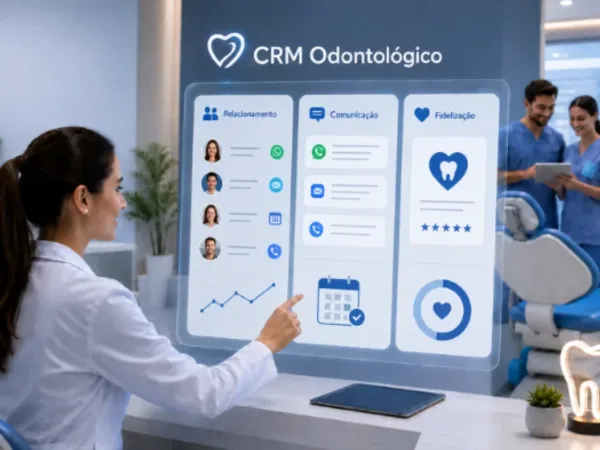
Although the real change is in strategy and management mindset, clinic management software is an essential support in the process.
It enables:
- Centralized information
- Automatic reports
- Control of the dental schedule
- Integrated financial organization
- Tracking of team performance
In other words, the software isn't the end goal. It's the infrastructure that supports the digital transformation.
Used well, it contributes to:
- Fewer no-shows
- Better administrative control
- Standardized processes
- Decisions based on concrete data
Technology supports the strategy. It doesn't replace it.
To go deeper into internal organization, we also recommend:
Read also: How to fix operational chaos in a dental clinic
Trend 4: leaner, more efficient clinics
Another clear trend is the push for efficiency.
Rising operating costs call for tight control.
Clinics are investing in:
- Standardized protocols
- Less waste
- Team training
- Automation of administrative tasks
First, this cuts hidden costs.
Next, it improves team performance.
As a result, it raises profit margins.
Productivity no longer means working more. It means working better.
How to prepare your clinic for market changes
Given these shifts, a few actions are essential:
- Review internal processes
- Define clear KPIs
- Invest in your online presence
- Train the team
- Build organized management
Practices that skip these steps tend to face:
- Financial instability
- Difficulty growing
- Loss of competitiveness
On the other hand, clinics that act early build a strategic advantage.
The dental market is professionalizing fast. The question isn't whether change will happen. The question is: is your clinic ready?
In 2026, the market rewards strategy, not just clinical skill
The dental landscape in 2026 demands more than technical excellence. It demands strategic vision.
The trends point to:
- Digitalization
- Data-driven management
- A better patient experience
- Operational efficiency
Clinic management software is a support tool within this larger movement, helping with organization, control and decision-making.
Clinics that keep up with the market grow predictably.
Clinics that resist change face instability.
The choice is strategic.
With Pro365 GO, the new ProDent that runs 100% on the web, your schedule, patient records, finances and KPIs live in one place, ready for where the market is heading. Book a demo to see how it can support your clinic.