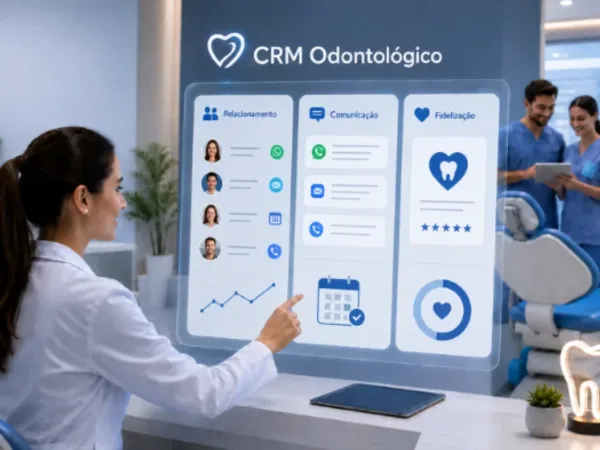
The dental patient experience improves when you design the whole journey, not just the time in the chair. Patients judge everything from the first call to the follow-up, and clinics that make each step smooth and predictable tend to grow more, even with the same team and space.
Today, great clinical work alone isn't enough. Patients evaluate the entire experience, and that journey is exactly where many clinics lose opportunities without noticing.
This isn't only about being friendly. It's about organization, time, communication, technology and how patients perceive value.
The problem: focusing only on the clinical side
Many clinics still put almost all their effort into the clinical work, assuming that's enough to keep patients coming back.
But patients don't only see the procedure. They also notice:
- wait times
- how clearly things are explained
- how easy it is to book
- how organized the office feels
- whether anyone follows up after the visit
When these points fail, the experience suffers, even if the treatment was excellent. A single bad experience is often enough to make a patient start looking for another clinic, so small slip-ups have a direct impact on retention.
The patient journey inside your clinic
To understand the experience, look at every step:
1. First contact
The patient reaches out, usually by phone, text or your website. Speed and clarity make a difference here.
2. Scheduling
If booking is slow or confusing, there's friction before the patient even walks in.
3. Confirmation
No confirmation creates uncertainty and leads to more no-shows.
4. Arrival
Lines, paperwork and waiting shape the patient's impression right away.
5. The appointment
This is where the clinical work happens, but it doesn't stand alone.
6. Follow-up
Checking in after the visit increases return visits.
Each of these steps can strengthen the experience or break it.
Where most clinics go wrong
The most common mistake is not seeing the clinic as a process.
Without a structured workflow, everything depends on the team's effort and memory. That leads to:
- inconsistent service
- communication gaps
- rework
- lost patients
Harvard Business Review has long pointed out that keeping existing customers usually costs far less than acquiring new ones. For a dental clinic, a well-designed patient journey is one of the most practical ways to protect that value.
The role of technology in the patient experience
This is where technology stops being optional.
Digital tools let you organize and standardize steps that used to depend on manual effort.
In practice, that includes:
- digital intake forms patients can fill out before the visit
- automated messages
- appointment confirmations
- a complete patient history
These features don't just make the day easier. They make the experience consistent, and consistency is what builds trust.
Communication: the most sensitive point
If there's one critical point in the dental patient experience, it's communication.
Clinics without a defined workflow end up:
- forgetting follow-ups
- replying late
- missing opportunities
- leaving questions unanswered
When communication is organized, on the other hand:
- patients feel looked after
- trust grows
- more patients come back
Simple, fast digital communication is what many patients now expect from any healthcare provider, so make sure your messages are clear and arrive at the right time.
Time: the biggest driver of perception
Time is another key factor. Patients value clinics that respect their schedule.
When delays are constant, the impact is immediate:
- frustration
- a sense of disorganization
- a lower chance they'll come back
Well-organized clinics, by contrast, can:
- stay on schedule
- cut wait times
- keep the day flowing
That doesn't come from working more. It comes from working better.
How to improve the experience in practice
Improving the dental patient experience doesn't require big changes, just strategic adjustments.
First, structure your processes. Each step needs a defined standard.
Next, organize communication, with clear messages sent at the right moment.
Use technology to automate repetitive tasks and keep things consistent.
Stay in touch after the appointment. Following up shows care and strengthens the relationship.
Finally, measure results. Indicators show where the bottlenecks are and what needs to change.
Patient experience and local search
The dental patient experience also affects how visible your clinic is on Google.
Clinics with strong reviews tend to show up more often in local search, because they:
- collect more positive reviews
- see more return visits
- get more referrals
In other words, improving the experience isn't only an internal matter. It's also a marketing strategy.
Great clinics are built in the details
The dental patient experience doesn't depend only on clinical care. It's built in every detail of the process.
Clinics that understand this stop improvising and start growing consistently. In the end, the difference between clinics that grow and those that stall is how patients feel throughout the journey.
With Pro365 GO, the new ProDent that runs 100% on the web, your team handles intake forms, confirmations, follow-ups and patient history in one place, so every patient gets the same smooth experience. Book a demo to see how it works in your clinic.