
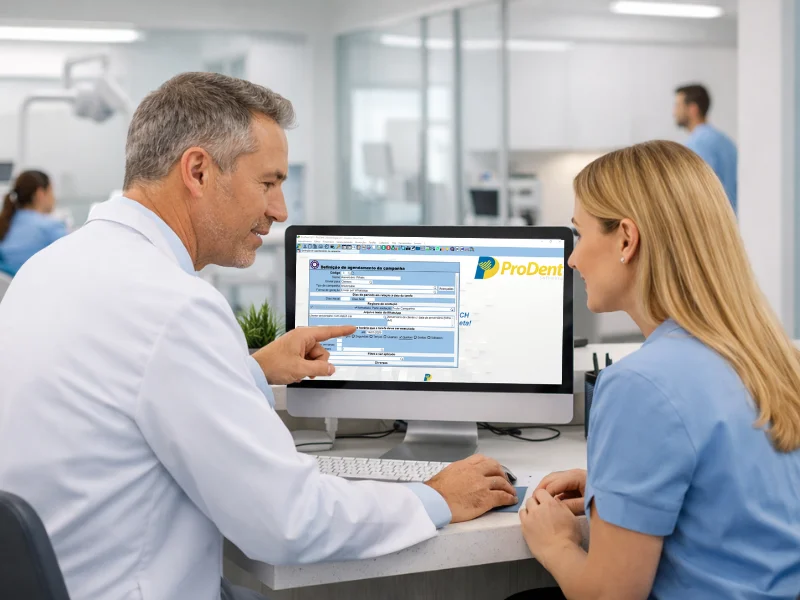
Dental clinic management stops being improvised when the clinic has clear processes, one system that holds all its information and a weekly routine of reviewing the numbers. Below are seven practical steps to get there, so the team spends less time putting out fires and more time growing with predictability.
First, a point worth making clear: managing a dental clinic is not just managing the schedule. It includes financial control, process organization, communication with patients, data analysis and smart use of technology. When those pieces are missing, improvising takes over the routine, creates rework, increases no-shows and makes strategic decisions harder.
Why running a clinic on improvisation stalls growth
No clear processes
Without defined processes, each team member does tasks a different way. That leads to:
- Frequent administrative errors
- Mismatched information
- Too much dependence on specific people
A lot of work, little result
Clinics without structured management tend to share the same symptoms:
- A full schedule, but irregular revenue
- No financial predictability
- A high no-show rate
The good news is that each of these symptoms points to a specific step.
7 steps to stop improvising
1. Standardize administrative processes
Write down how recurring tasks should be done: scheduling, check-in, confirmations, payments, the end-of-day close. When everyone follows the same standard, errors drop and the clinic stops depending on one person's memory.
2. Centralize everything in one system
A dental clinic management system works as the clinic's command center. It brings into one place:
- The dental schedule
- Financial data
- Patient history
- Performance indicators
This is what lets management move from reactive to strategic.
3. Automate appointment confirmations and communications
Confirming appointments by hand eats up front desk time and is easy to forget on busy days. Automating confirmations and routine messages frees the team for the conversations that really need a person, and it pays off: among ProDent client clinics, no-shows fell from about 15% to 2.7% after they adopted automatic confirmation (HartSystem client data).
4. Make idle time visible
With the schedule in a system, empty slots stop being a surprise. The team can see gaps in advance and fill them instead of finding out at the end of the day.
5. Monitor the no-show rate
No-shows are one of the clearest signs of a clinic running on improvisation. Track the rate regularly so you know whether confirmations and reminders are working.
6. Track financial indicators
Following revenue, receivables and expenses in the same system as the schedule makes cash flow more predictable and reduces stress for the team.
7. Review reports every week and decide with data
Review your reports weekly. In practice, that means:
- Making decisions based on reports, not perception
- Adjusting processes quickly
- Investing with more confidence
Before and after: a clinic with and without structured management
Without a management system
- A manual schedule
- Weak financial control
- Decisions based on perception
- Limited growth
With dental clinic management software
- An integrated schedule
- Centralized data
- Clear indicators
- An organized clinic that can scale
Organization shows up in the patient experience
An organized dental clinic conveys confidence. When the workflow runs smoothly, patients notice the value from the first contact.
The reverse is also true: a single poor experience can be enough for some patients to stop coming back. That's why management and patient experience are so closely connected.
Management is a routine, not a one-off effort
A common mistake is believing that clinic management can be fixed with isolated actions. In reality, efficient dental clinic management is built with routine, constant tracking of indicators and smart use of technology.
When the clinic starts reviewing reports every week, identifying bottlenecks and standardizing processes, growth stops being random. Management no longer depends on the team's memory and is supported by reliable data instead.
That's the turning point between clinics that just get by and clinics that grow with predictability.
Predictability comes from steps you repeat
Efficient dental clinic management doesn't happen by accident. It takes clear processes, smart use of technology and decisions based on data. Clinics that put these seven steps into their routine reduce errors, improve the patient experience and grow with more control.
With Pro365 GO, the new ProDent that runs 100% on the web, your schedule, finances, patient history and KPIs live in one place, so the weekly review takes minutes. Book a demo to see how it fits your clinic.