
Delegating tasks in a dental clinic means giving each team member clear ownership of specific work, with a defined goal, deadline and follow-up. Done well, it keeps the clinic organized and frees the owner to focus on decisions that drive growth.
When you're starting your career or opening a clinic, it's common to try to handle almost everything yourself, from the schedule to financial and administrative decisions.
As the clinic grows, that model stops working.
When the owner holds on to every responsibility, problems start to show up:
- work overload
- delayed decisions
- trouble keeping an eye on KPIs
- low team productivity
When tasks are well distributed across the team, on the other hand, the clinic runs in a much more organized way.
Delegating doesn't mean losing control. It means building a structure where every person knows exactly what they're responsible for.
Why delegating matters in a dental clinic
A dental clinic involves many activities that go well beyond clinical care, including:
- managing the schedule
- front desk service
- financial control
- patient follow-up
- supplies and inventory
- patient communication
When all of these sit with the owner, the clinic loses efficiency.
Delegating lets each team member contribute through their own role. The main benefits include:
- higher team productivity
- more time for the owner to focus on strategic decisions
- a more organized administrative routine
- fewer operational mistakes
Clinics that assign responsibilities clearly tend to be managed much more efficiently.
The most common delegation mistakes
Even though delegating is essential, many clinic owners still struggle with it. A few mistakes come up again and again.
Delegating without explaining the process
Just asking someone to do a task isn't enough. You need to explain:
- the goal of the task
- the expected result
- the deadline
Without that information, mistakes become more likely.
Not naming a clear owner
Another common mistake is not making it clear who is responsible for an activity.
When several people are responsible at the same time, often no one actually takes it on.
No follow-up
Delegating doesn't mean walking away. The owner needs to follow how the work is being done and make sure it's done correctly.
How to identify which tasks you can delegate
Not every activity needs to be done by the owner. A simple way to find tasks you can hand off is to review the clinic's routine and ask:
- Does this task require a strategic decision?
- Do I really need to do this myself?
- Could someone on the team do it with the right training?
Many operational tasks can be delegated, for example:
- confirming appointments
- managing the schedule
- contacting patients
- tracking inventory
- sending treatment plans
That frees the owner to focus on planning and growing the clinic.
Step by step: delegating effectively
To delegate in a structured way, a few steps are essential.
1. List every task in the clinic
Start by mapping the activities that make up the clinic's routine. Group them into categories such as:
- administrative
- financial
- patient service
- scheduling
2. Assign owners
Once the tasks are mapped, decide who is responsible for each one.
3. Create standards for how work gets done
To avoid mistakes, write short procedures or guidelines for how each task should be done. That helps standardize how the clinic operates.
4. Set deadlines and priorities
Every task needs a clear deadline. That helps the team organize their work.
5. Track the results
Delegating also means following up on results. The owner can regularly review:
- the quality of the work done
- whether deadlines are met
- how organized the team's routine is
How to keep track of team responsibilities
One of the hardest parts of delegating is knowing what's actually getting done. A few clinics help.
Short weekly meetings
Quick check-ins help align tasks and spot problems early.
A team task list
Keeping a record of tasks makes it easier to follow the administrative routine.
Performance indicators
A few KPIs can show how the clinic is running, such as:
- schedule utilization
- no-show rate
- monthly revenue
Clinics that organize processes and responsibilities usually see clear gains in day-to-day efficiency.
How technology helps you manage tasks
Delegating depends mostly on how the team is organized, but digital tools can make the process much easier.
Dental clinic management software helps centralize information and organize the team's work. Some of the most useful features are:
- a record of administrative activities
- visibility into the clinic schedule
- organized patient information
- integrated financial management
- quick access to practice data
These features help the owner see how the clinic is running and follow the team's responsibilities. Technology becomes the support that keeps tasks organized and management on track.
Delegating is how a clinic stops depending on one person
Delegating is one of the most important steps in organizing a dental clinic.
When the owner tries to do everything, the clinic loses efficiency and the routine gets more stressful. When responsibilities are clearly shared, the team works in a more organized and productive way, and the owner gains time for strategic planning and growth.
Simple delegation processes can completely change how the clinic runs day to day. If you feel you're carrying too much, it may be time to reorganize your team's tasks.
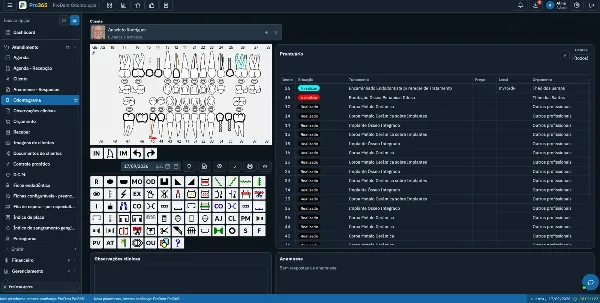
With Pro365 GO, the new ProDent that runs 100% on the web, your team shares the same schedule, patient records, financials and KPIs, so it's easier to hand off work and see what's getting done. Book a demo to see how it fits your clinic.