Dental practice accounting is most useful to the owner when the month-end close arrives on time, with context, and helps answer a specific decision: hire, invest, protect cash or take a distribution. That requires the front desk, the in-house finance person, the CPA or bookkeeper and practice leadership to know what each of them records, checks, interprets and decides.
Many practices send documents to their accountant, get back tax forms and reports, and still cannot say with confidence how much the business earned, why cash moved the way it did, or whether there is room to hire, invest or take money out.
That is not necessarily the accountant's fault. Nor is it solved just by buying software. The problem usually sits in the handoff between what happens in the practice and what reaches accounting. Scheduling, treatment estimates, production, collections, payments, commissions and overdue balances follow different events. When the context gets lost, the close can be technically correct and still arrive too late, or explain too little, for a management decision.
That is why accounting creates more value when there is clear governance between the practice, whoever handles finance in-house, the accountant and leadership.
This article is about management. It does not replace accounting, tax, legal or employment advice for your specific practice.
Why do the practice and the accountant see different numbers?
Because they look at the same business through different events. A completed procedure is not the same as a payment received. An accepted treatment plan is not cash in the bank. Money that came in today may relate to a visit last month. An expense paid today may belong to another period. A provider's commission may depend on internal rules and on when the patient paid.
The SBA's guide to managing your finances gives the classic example: a sale made in January and paid in February lands in January under the accrual method and in February under the cash method. Same transaction, two different months.
When these events get mixed together, the owner looks at numbers that are each correct and draws the wrong conclusion about the whole.
| Number | What it shows | The question it answers |
|---|---|---|
| Production | Dentistry delivered in the period | How much work did we do? |
| Collections | Money received, sometimes for earlier visits | How much did patients and payers actually pay? |
| Cash | What is left after money in and money out | How much is available to decide with? |
Timing matters too. In the FASB Conceptual Framework, Concepts Statement No. 8, Chapter 3, paragraph QC29 defines timeliness as having information available to decision makers in time to be capable of influencing their decisions, and adds that, generally, the older the information is, the less useful it is.
For a practice, the takeaway is simple: a flawless number that arrives after you have already hired or invested has lost much of its management value.
That does not mean rushing the close without checks. It means designing the routine so discrepancies surface earlier, every document has an owner, and decisions know how current the data is.
How do you prepare the month-end close before the last day?
If all the checking is left for month-end, the close turns into a history project. The team hunts for receipts, reconstructs payment arrangements, asks what a deposit was for and tries to work out why a payment was coded a certain way.
A better management close is built during the month, at four points.
1. Where the event happens
The treatment estimate keeps its status and context. The payment is linked to the right patient and treatment. Each bill has a vendor, a reference and a document. Commissions follow the agreed rule. Overdue balances reflect the real state of accounts receivable.
This is where accurate financial records really start. As the IRS recordkeeping page puts it, purchases, sales, payroll and other transactions generate supporting documents, and those documents contain the information you need to record in your books.
2. The operational check
The person responsible for finance reviews open items, duplicates, discrepancies and incomplete entries while the context can still be recovered quickly.
3. The handoff to accounting
The practice delivers documents, categories and explanations in an agreed format. The accountant sends questions back in a traceable way and flags which numbers still need validation.
4. Leadership's review
The owner connects the close to the decision at hand. The goal is not to interpret technical accounting alone, but to understand business performance with the right professionals.
Who does what between the practice, finance and the CPA?
There are four responsibilities that should not be confused.
The team records what happened
Front desk, treatment coordinator, clinical team and finance all generate data that later supports management. Each role should record what falls under its responsibility, respecting access rights, professional scope and patient privacy.
Your accountant cannot rebuild, on their own, a treatment estimate with no status, a payment with no reference or an expense with no document.
In-house finance checks and organizes
The office manager or finance lead follows bills, collections, payments, commissions, overdue balances and discrepancies. This role does not replace the accountant, but it improves the information sent and shortens the distance between the practice and the books. It is the day-to-day side of dental financial management. For provider pay, a clear commission payout process prevents many month-end disputes.
Accounting applies the technical treatment and advises
Account classification, filings, financial statements, tax positions and other technical responsibilities belong to qualified professionals and to the scope of their engagement. The SBA notes that a bookkeeper can handle basic day-to-day functions at a lower cost, while a CPA can offer more tailored service. Either way, the practice must bring complete facts and clear questions.
Leadership decides, with the right caveats
The owner or partners use the information to hire, invest, adjust expenses, review fees, protect working capital and plan growth. The decision must take into account what is closed, what is an estimate and what still needs validation.
What should you send your dental practice accountant at month-end?
There is no single package that suits every practice. Define the format with your accountant and your internal team. As a management reference, the handoff can cover five groups of information:
- The month's activity: deposits, payments, payables, commissions and other relevant events, with the supporting documents and references.
- Known open items: unreconciled amounts, missing documents, unidentified deposits, categories in doubt, insurance claims still pending and entries awaiting correction.
- Changes that affect comparison: a new hire, extended hours, a campaign, a major purchase, new payment terms, a new specialty or anything else that makes the month different from history and from your practice budget.
- Management's questions: what does the practice need to decide with this close? Hire, protect cash, cut an expense, evaluate a service line or change a policy? Without a question, the meeting tends to end as a presentation.
- Confidence level: which numbers are reconciled, which are provisional and which still need validation? This distinction prevents false precision.
What questions should you bring to the meeting with your CPA?
Did results change because of volume, fees, mix, cost or timing of recognition?
This question stops every change from being explained as "we worked more" or "we spent too much".
Do we understand the gap between production, collections and cash?
The three numbers answer different questions. Leadership needs to know which one it is using before making a decision.
Which open items could change the picture?
A close with incomplete entries must state that limitation. The owner can choose to wait, work with a range or take a protective measure.
Which operational fact explains the biggest change?
Scheduling, show rate, treatment acceptance, new treatment starts, overdue balances, hiring and one-off expenses can all provide context. Bring evidence, not convenient stories.
What decision needs to be made, and which specialist should be involved?
Not every answer belongs to the accountant. Legal, employment, regulatory, ownership or clinical questions need the right people.
Is financial integration just automation?
No. Integrating finance with the practice's processes means accepting that financial data is born in operations: at scheduling, in the treatment estimate, in the procedure, at check-out and when a bill is paid, not just in the bank statement at month-end.
Automation can reduce typing and speed up the handoff, but it does not fix an ambiguous policy, a treatment estimate with no status, an owner draw with no rule or a category chosen without context.
Maturity shows when the practice can explain where a number came from, who checked it, what technical treatment it received and which decision it supports.
How do you measure the quality of your month-end close?
Beyond the financial results, the practice can watch the quality of the routine itself:
- days between the end of the period and a usable management report;
- number of adjustments caused by incomplete entries at the front desk or chairside;
- open items that repeat month after month;
- unexplained gaps between production, collections and cash;
- decisions postponed because the information came late or could not be trusted.
These are measures the practice can track on its own, not a ready-made software report. Define the terms, the owners and the source of each number with your accountant.
Where should you start?
Do not try to redesign the whole close at once. Pick one recurring discrepancy, such as an unidentified deposit, an expense with no document, a disputed commission or a gap between production and cash.
Trace it back to its origin, the check, the handoff to accounting and the decision it affected. Assign one owner and a deadline to fix the point where information gets lost. The following month, check whether the discrepancy disappeared or just moved somewhere else.
Governance between the practice and accounting begins when the close stops being a file transfer and becomes a structured conversation about facts, criteria and decisions.
How does Pro365 GO support the conversation with your accountant?
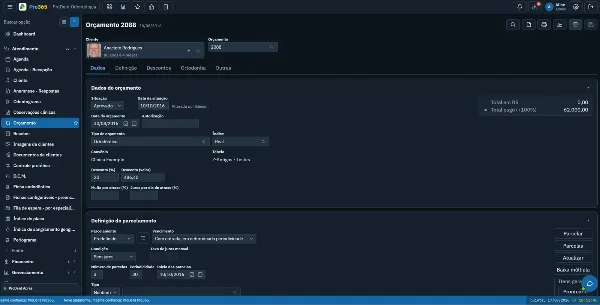
In Pro365 GO, the new ProDent, finance covers payments, payables, bank reconciliation, cash closing, overdue accounts and commissions by provider, with automatic payment reminders. Approved treatment plans become installments without retyping, and you see which payment method the money came in through.
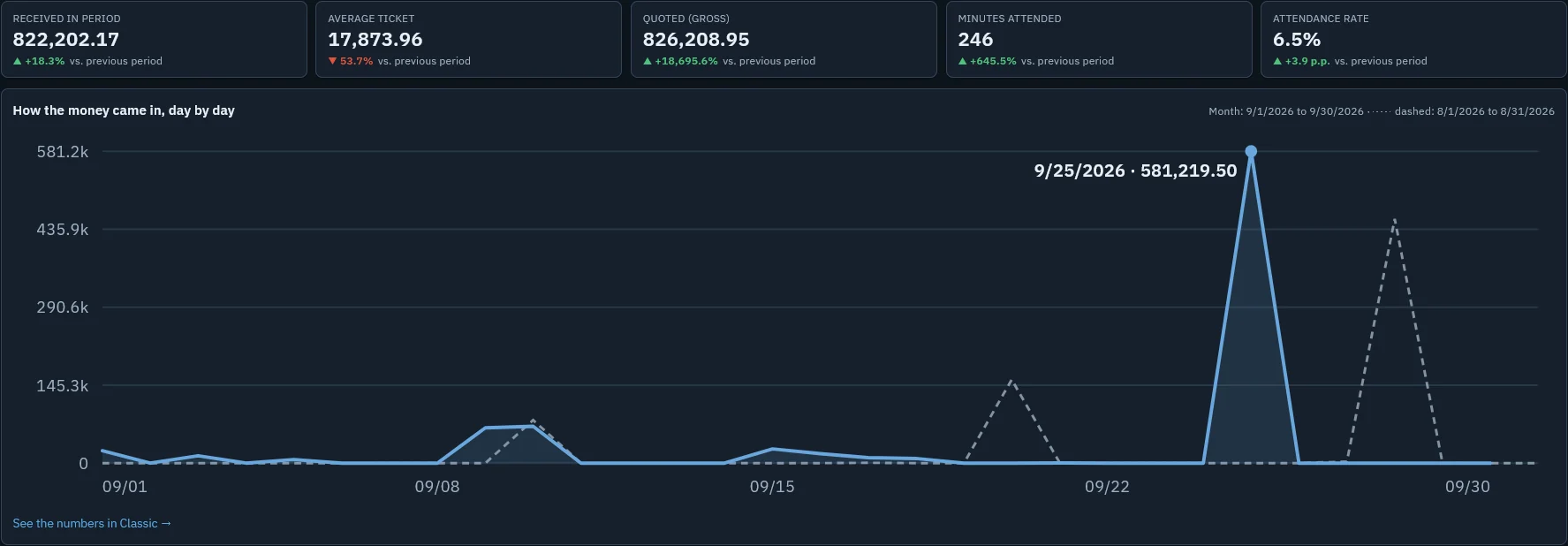
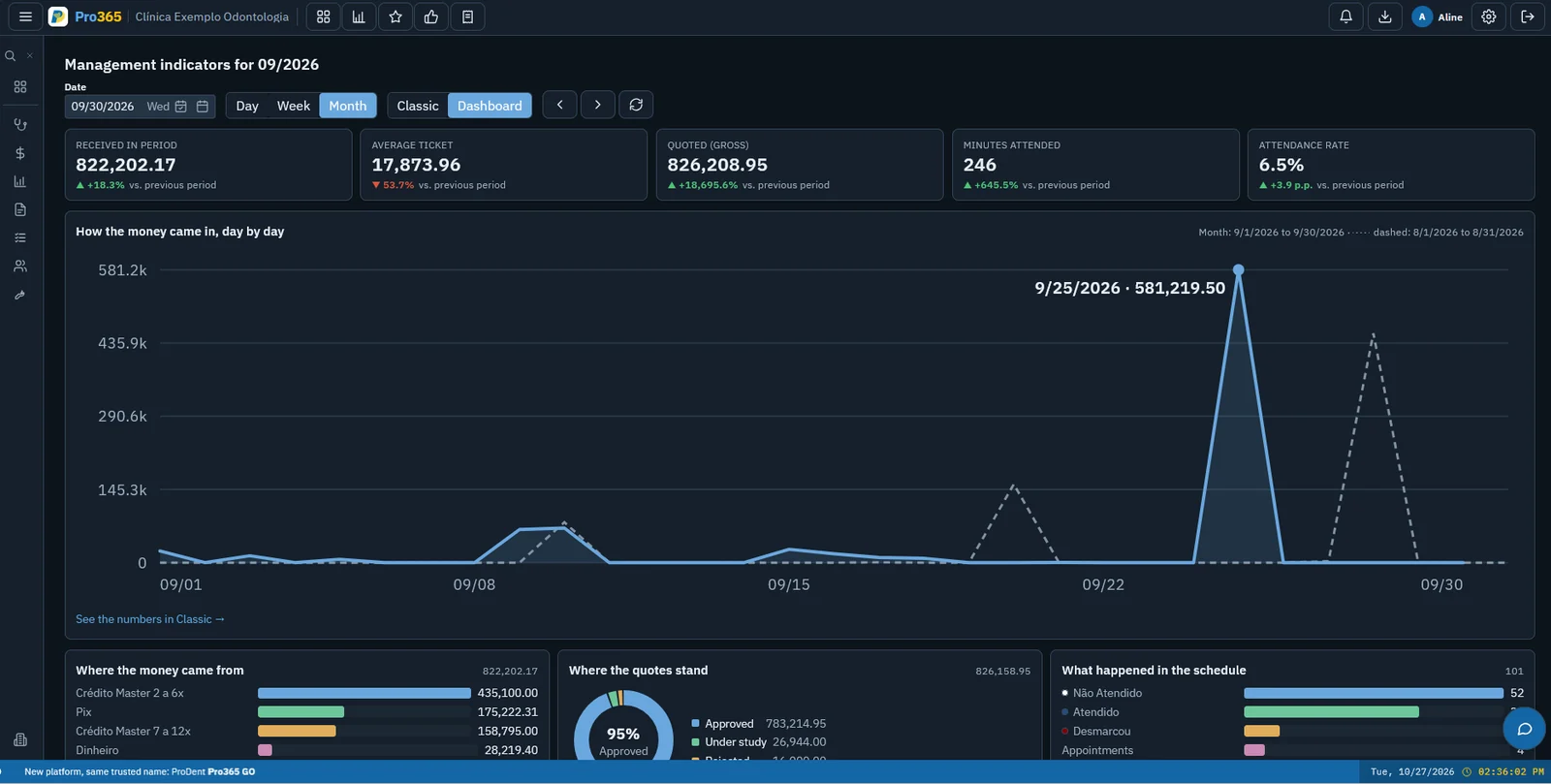
The management dashboard supports the review of scheduling, treatment estimates, production, collections and payments, and Pro365 AI Consultant answers questions about that data over WhatsApp. How reliable the numbers are depends on the recording routine, and HartSystem's support and consulting team can help with setup, training and day-to-day use.
The software organizes the operational records. Your accountant remains responsible for the technical treatment within their scope. Leadership remains responsible for asking the questions, stating the uncertainties and deciding with the right specialists. Book a demo to see finance and the dashboard with your own practice's routine.
Written by the HartSystem team, which has developed ProDent dental software since 1993 and works with practices in Brazil, Portugal, the United States, Mozambique and Paraguay.