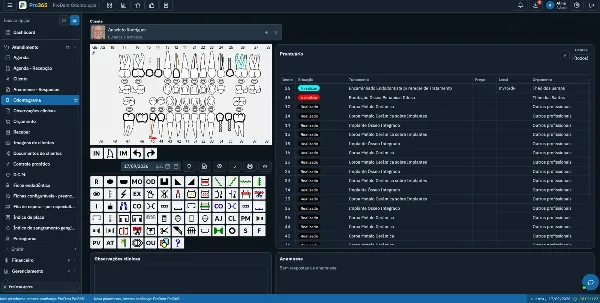

Accurate financial records are what let a dental clinic know its real profit instead of guessing it. Revenue can be high while profit stays unknown, simply because procedures, payments or expenses never made it into the system correctly. Recording everything completely and on time is what turns your numbers into something you can manage.
Many clinics believe they have financial control, but in practice they're operating with incomplete information. That happens when:
- procedures aren't recorded correctly
- payments received aren't updated
- expenses are forgotten
- reports don't reflect reality
The result is risky: the clinic thinks it's growing, but doesn't know exactly how much it's earning.
What it means to record your clinic's finances correctly
Recording your finances correctly goes far beyond entering amounts into a system.
It means making sure every transaction in the clinic is recorded completely, accurately and at the right time.
That includes:
- every appointment completed
- every payment method
- every payment actually received
- every operating expense
When any of this information is missing, the system stops reflecting reality. And without reality, there's no management.
The silent problem: high revenue, unknown profit
Many clinics go through the same scenario:
- a full schedule
- plenty of money moving through the account
- a steady flow of patients
But at the end of the month:
- there's no money left over
- there's no clear picture of profit
- decisions get stuck
This happens because revenue is being confused with results. Financial trouble in a busy clinic rarely comes from a lack of work. It comes from a lack of control.
The most common recording mistakes
The problem is rarely a single mistake. It builds up over time.
First, many clinics don't record every appointment correctly. That creates a gap between what was done and what was billed.
Next, payments aren't followed up properly. Installment plans and late payments end up without any structured tracking.
Small expenses are also often ignored. Added together, they directly affect the bottom line.
Another critical mistake is not categorizing income and expenses. If you don't know where the money comes from and where it goes, no analysis is possible.
So the problem isn't a lack of activity. It's a lack of organization.
How incomplete records affect the whole clinic
When the books aren't kept correctly, all of clinic management suffers. The clinic loses:
- predictability
- cost control
- the ability to plan
- confidence in its decisions
Without reliable data, important decisions end up being made on gut feeling. Decisions based on real data are what allow a clinic to grow in a sustainable way.
How to record your finances correctly, day by day
Getting your finances organized doesn't require complexity, but it does require discipline.
- Record every procedure in the system.
- Update payments as they happen, not later.
- Record expenses every day, without exception.
- Categorize income and costs correctly so you can analyze them clearly.
- Review reports frequently, not just at the end of the month.
Together, these habits turn finance from an operational chore into a strategic function.
The role of dental clinic software
This is where technology stops being a helper and becomes essential. Well-used dental software allows you to:
- record appointments automatically
- manage accounts receivable
- track overdue balances
- categorize expenses
- generate financial reports
More importantly, it brings all of this information into one place. That reduces errors and rework and makes the data more reliable.
Your schedule and your finances are connected
Many managers don't notice that the schedule and revenue predictability go hand in hand. If the schedule isn't organized, there are:
- no-shows
- poorly planned same-day add-ons
- lost productivity
And all of that hits the finances directly.
Metrics you should be tracking
With accurate records, you finally get access to real metrics. The main ones are:
- monthly revenue
- amount actually collected
- overdue balances
- average revenue per patient
- real profit
These numbers show what's working and what needs to change. Clinics with organized finances also tend to invest better in marketing, facilities and the patient experience, which leads to:
- more positive reviews
- better patient retention
- sustainable growth
Good decisions start with good records
Recording your finances correctly isn't an administrative task. It's a strategic decision.
Without accurate data, you don't know how much you earn, where you lose money or how to grow. With accurate data, you can control, plan and grow with confidence. The difference between clinics that just survive and clinics that grow is the quality of their information.
With Pro365 GO, the new ProDent that runs 100% on the web, procedures, payments and expenses are recorded in one place, so your reports show the profit you really have. Book a demo to see how it works in your clinic.