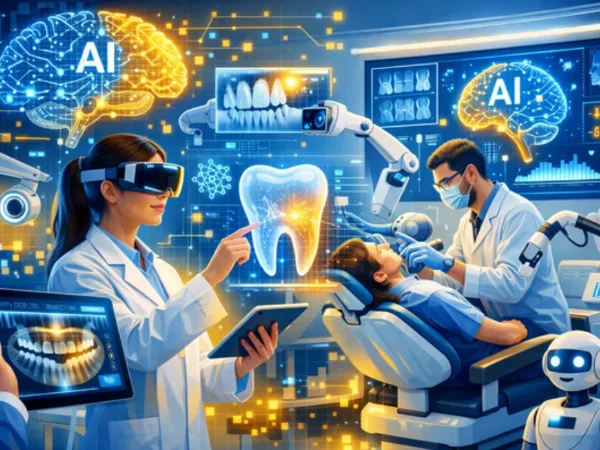

Dental AI market trends point to one clear shift: clinics that master data, processes and technology are pulling ahead. AI took off because of tougher competition, an overload of repetitive tasks and the need for better decisions, and getting started comes down to four practical steps.
Clinics used to grow on referrals and patient volume alone. Today, the dental market is more competitive, more digital and more demanding. AI is becoming a dividing line between clinics that are organized and clinics that are just getting by.
What AI means for a dental clinic
Artificial intelligence is the ability of software to analyze data, learn patterns and support decision-making. Inside a clinic, that means:
- automating repetitive tasks
- organizing large volumes of information
- generating insights about the clinic's performance
- reducing operational errors
More than technology, it's about smart, data-driven management.
Why AI became a market trend
There are three main reasons.
1. Tougher competition
Good care alone is no longer enough. Clinics also need to be:
- fast
- organized
- efficient in their processes
2. Too many operational tasks
Every day, clinics handle:
- appointment confirmations
- schedule management
- financial control
- patient intake and check-in
Without automation, all of this eats up time and leads to mistakes.
3. The need for strategic decisions
Clinic owners need to know:
- what's working
- where the problems are
- how to grow predictably
That's only possible with organized data.
Where AI is already being applied
The technology is already part of the routine, often without the clinic noticing.
Routine automation
AI makes it possible to automate:
- appointment reminders
- confirmations
- follow-up messages
This helps reduce no-shows and fill the schedule.
Smart data analysis
AI quickly answers questions such as:
- Which specialty brings in the most revenue?
- How many patients missed appointments?
- Which time of day has the most demand?
That replaces guesswork with facts.
Team support
Software with AI works like an assistant:
- explaining features
- guiding processes
- reducing errors
The result is a more productive, more independent team.
Organized patient flow
AI also helps standardize the work:
- data filled in automatically
- information in one place
- an organized patient history
This improves control and the patient experience.
How AI changes the way a clinic grows
Before AI
- little control
- manual processes
- reactive decisions
- slow growth
After AI
- data-driven management
- automated processes
- strategic decisions
- predictable growth
The difference isn't just the technology. It's the way the clinic is managed.
Four trends to watch
1. Data-driven clinics
Everything will be measured:
- productivity
- finances
- patient conversion
2. Automated patient communication
From first contact to post-visit follow-up:
- automatic messages
- an organized patient journey
- fewer human errors
3. Fully integrated processes
Schedule, financials, patient records and patient communication connected in a single flow.
4. AI as a management assistant
The owner will simply ask:
- "How was my revenue this month?"
- "Which team is producing the most?"
And get an answer right away.
How to start using AI in your clinic
Four practical steps:
1. Organize your data
Without structured data, there's no artificial intelligence.
2. Digitize your processes
Replace paper, spreadsheets and manual controls.
3. Automate repetitive tasks
Free up the team's time for more strategic work.
4. Track your metrics
Use data to make decisions.
The market is moving now, not someday
AI in dentistry isn't a future innovation anymore. It's changing the market right now. Clinics that adopt it work better, make fewer mistakes and grow faster, while others stay stuck in old processes.
Pro365 GO, the new ProDent that runs 100% on the web, comes with Pro365 AI built in to automate routine work and help you decide with more confidence. Book a demo to see where AI can start in your clinic.