Digital dental intake forms cut delays where they usually start: at check-in. When patients complete their information before the visit, the front desk stops losing minutes on every arrival, appointments begin on time and the schedule stays on track for the rest of the day.
Every step of the patient journey affects:
- team productivity;
- how organized the clinic is;
- the experience patients perceive;
- financial results.
And there's a critical point in that journey that many clinics still overlook: the front desk. That's where you still see:
- forms filled out by hand;
- unnecessary waiting;
- rework for the team;
- appointments that start late.
It may look like just the first step, but it affects the flow of the entire day. In other words, when information starts out wrong, everything that depends on it suffers.
Small check-in delays, big impact on productivity
Productivity is directly tied to how time is used. When the front desk spends extra minutes on each arrival, those minutes add up over the day.
With digital intake forms:
- the front desk stops being a bottleneck;
- appointments start faster;
- the team spends less time on repetitive tasks.
That's a direct efficiency gain.
Standardized, higher-quality information
Standardization is another critical point. Manual processes vary depending on:
- the team member;
- the time of day;
- how the form is filled out.
With digital intake:
- fields are structured;
- answers follow a standard;
- data is consistent.
That has a direct effect on:
- the patient history;
- treatment follow-up;
- the quality of the record if questions come up later.
The patient experience starts before the chair
The patient experience starts before clinical care, and the check-in moment is decisive.
When patients have to fill out forms on arrival:
- waiting time goes up;
- frustration sets in;
- the clinic looks less organized.
With digital intake:
- patients arrive prepared;
- the visit flows better;
- the clinic comes across as modern.
Fewer delays across the schedule
Small delays at check-in create a chain reaction in the schedule. With digital intake forms:
- appointments start on time;
- the schedule stays organized;
- the day becomes more predictable.
When combined with:
- reminders;
- confirmations;
- automations;
the result is a more controlled, more efficient clinic.
Better decisions start with better data
Good management depends on reliable data, and that starts with how information is collected.
Digital intake ensures:
- complete data;
- organized information;
- a structured history.
Harvard Business Review has long made the case for basing decisions on data rather than intuition. At a dental clinic, good data from intake supports:
- better planning;
- analysis of the patient mix;
- spotting opportunities.
Side by side
A clinic without digital intake
- manual processes;
- longer check-ins;
- risk of errors;
- rework;
- disorganization.
A clinic with digital intake
- information collected in advance;
- less time at check-in;
- structured data;
- automatic integration;
- greater efficiency.
On-time appointments start with intake
Digital intake for dental clinics isn't just an operational improvement. It changes how the clinic organizes:
- its time;
- its data;
- its patient experience.
More than digitizing a form, it's about cutting waste and running on time. Clinics that adopt this model tend to be more organized, more productive and better prepared to grow.
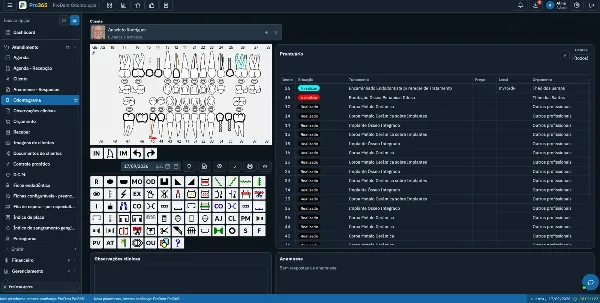
With Pro365 GO, the new ProDent that runs 100% on the web, Fast-in intake forms feed straight into your schedule and patient records. Book a demo to see how it keeps your day on time.