
Dental clinic financial KPIs tell you what's actually left after the bills are paid, not just how much came in. The five that matter most are monthly revenue, net profit, case acceptance rate, operating cost and revenue per chair. They only work, though, when revenue and expenses are recorded properly first.
Many dental clinics face the same challenges:
- no clear picture of real profit
- personal and clinic accounts mixed together
- expenses that get out of hand
- growth without a plan
The result is frustrating: the clinic sees plenty of patients, but there never seems to be money left over.
The good news is that there's a simple method to organize your finances and start making decisions based on numbers. In this article you'll learn:
- how to structure financial control in your clinic
- which performance metrics to track
- how to organize income and expenses
- how to turn numbers into strategic decisions
Why so many dental clinics struggle with finances
Most dentists receive little or no training in financial management in dental school. The focus stays almost entirely on clinical care.
As the clinic grows, problems start to show up:
- no control over cash
- unplanned spending
- trouble calculating profit
- no financial planning
Financial organization isn't just paperwork. It decides whether the clinic stays healthy, and dental software can help keep it in order.
The basic structure of financial control
Before choosing any tool, the clinic needs a clear structure. Financial control rests on three pillars.
1. Revenue
Everything that comes into the clinic, such as:
- procedures performed
- installment payments
- accepted treatment plans
2. Expenses
Every cost of keeping the clinic running:
- rent
- payroll
- dental supplies
- dental lab fees
- marketing
- taxes
3. Profit
Profit isn't the money that comes in. Profit is:
Total revenue – total expenses
This simple calculation often isn't tracked correctly, and that's where financial confusion begins.
How to organize your clinic's revenue
The first practical step is to record every payment that comes in. The clinic needs to know:
- how much it billed in the month
- how many treatment plans were accepted
- what the average revenue per visit was
Step by step
1. Record every appointment you complete
Don't rely on memory or loose notes.
2. Group procedures by type of treatment
For example:
- orthodontics
- implants
- cosmetic dentistry
- cleanings and prophylaxis
This shows which areas bring in the most revenue.
3. Track average revenue per visit
A simple formula:
Average revenue per visit = total revenue ÷ number of visits
This number helps you see whether the clinic is growing in a healthy way.
Controlling expenses and fixed costs
Another common mistake is ignoring small expenses. Over time they add up and cut straight into profit.
Review expenses every month. Small adjustments can add up to real savings over the year.
The 5 essential financial KPIs
Beyond revenue and expenses, the clinic should follow a short set of strategic indicators.
1. Monthly revenue
The total volume the clinic brought in during the month.
2. Net profit
How much is really left after every bill is paid.
3. Case acceptance rate
How many treatment plans turn into treatment.
4. Operating cost
How much it costs to keep the clinic open each month.
5. Revenue per chair
How productive the clinic's physical structure is.
Read together, these five numbers support much better decisions than any one of them alone.
Where dental software fits into financial management
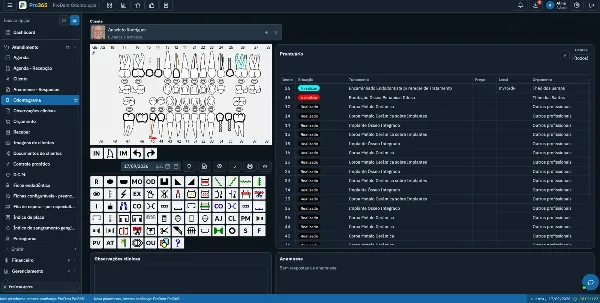
Dental software is an organizing tool within financial management. It helps you:
- keep track of treatment plans patients are still considering
- control payments and installments
- follow revenue
- see financial data with Pro365 AI
- monitor the clinic's KPIs
Without software, many owners rely on parallel spreadsheets or manual records, which increases errors and makes financial analysis harder. Software keeps the information centralized and organized.
Financial health comes from organization, not more appointments
A financially healthy dental clinic doesn't depend only on seeing more patients. It depends mainly on organization.
When the owner or office manager keeps control of:
- revenue
- expenses
- financial KPIs
decisions become much safer. With well-structured processes and the right tools, the clinic gains financial predictability, improves its management and builds a solid base to grow.
With Pro365 GO, the new ProDent that runs 100% on the web, your schedule, billing and KPIs live in one place. Book a demo to see how it organizes your clinic's numbers.