
Dental clinic overdue payments rarely start when a bill goes unpaid. They start earlier, in how the treatment and its cost are presented, agreed on and followed up. To reduce them without hurting patient relationships, you need a clear process from the treatment plan to the final payment.
Overdue accounts are one of the quietest problems in a clinic. They don't look like an obvious service failure, but they hit cash flow, financial predictability and growth directly.
Many clinic owners try to fix this by collecting harder or being stricter. The real gains come from structuring the full process, from the estimate to after the treatment.
Where overdue payments really begin
Before thinking about collections, understand the key point: the problem doesn't begin when a payment is late.
In most cases, overdue payments come from situations like these:
- the patient didn't clearly understand the cost of treatment
- the payment terms were confusing
- the agreement was never put in writing
- financial follow-up was missing or inconsistent
In other words, overdue payments are much more a process problem than a patient behavior problem.
1. Put everything in writing from the start
One of the biggest mistakes is relying on verbal agreements. They leave room for forgetting, different interpretations and delays.
Every treatment should have:
- a written financial agreement, signed electronically and attached to the treatment plan
- clear payment terms
- set due dates
- a record in your clinic software
Besides keeping the clinic organized, this comes across as professional and cuts down on future disputes.
2. Make the cost of treatment completely transparent
When patients understand exactly what they're paying for, they're less likely to fall behind.
That means:
- itemizing procedures
- explaining each phase
- presenting fees clearly, including what insurance is expected to cover and what the patient owes
- showing the full treatment plan
Ambiguity creates uncertainty, and uncertainty often turns into late payments.
3. Offer realistic payment options
Not every patient can pay the same way. When the clinic forces everyone into one model, the risk of overdue accounts goes up.
Consider options such as:
- planned in-house payment plans
- a down payment plus installments
- recurring monthly payments
- payments tied to each phase of treatment
The better the payment plan fits the patient's reality, the more likely they are to pay on time.
4. Automate financial tracking
Tracking payments by hand is one of the fastest ways to miss due dates, forget follow-ups and lose control of the clinic's finances.
Dental clinic management software lets you:
- track accounts receivable
- see overdue balances in real time
- organize installments
- generate financial reports
With that, the owner stops improvising and gets real control over the clinic's financial health.
5. Get ahead of collections with smart reminders
Collecting after a payment is late is always harder than preventing it.
That's why well-organized clinics use automated reminders, such as:
- notices before the due date
- payment confirmations
- text messages and emails
This simple step reduces forgotten payments and improves on-time payment without creating friction.
6. Have a standard collection process
Improvising collections is a common mistake. Each front desk team member says something different, every case becomes an exception and the process loses consistency.
Create a defined workflow instead:
- first contact (reminder)
- second contact (follow-up)
- payment conversation (if needed)
- a record in the system
Standardizing doesn't mean being rigid. It means being organized.
7. Track your clinic's financial KPIs
Without indicators, the clinic doesn't know whether the problem is growing or shrinking.
Some important KPIs:
- overdue account rate
- total balance outstanding
- average days past due
- amount recovered
These numbers help the owner make decisions based on facts, not impressions.
8. Make technology part of the financial process
Many clinics have software but only use the basics. The real gain comes when technology is built into the financial process.
More complete solutions let you:
- automate payment reminders and follow-ups
- organize financial agreements
- connect the schedule with billing
- generate useful analysis
When everything talks to each other in one system, the clinic cuts human error and works more efficiently.
Fewer overdue payments come from better organization, not tougher collections
Reducing overdue payments in a dental clinic doesn't mean collecting harder. It means organizing better.
Clinics that structure their process from the start, use technology and track their KPIs can reduce late payments without hurting the patient experience. In the end, the difference isn't the collection call itself but how the clinic builds the financial relationship throughout treatment.
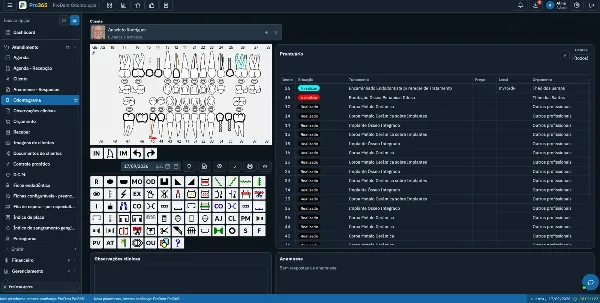
With Pro365 GO, the new ProDent that runs 100% on the web, treatment plans, payment agreements, installments and receivables live in one place, so your team sees what's due before it becomes overdue. Book a demo to see how it works for your clinic.