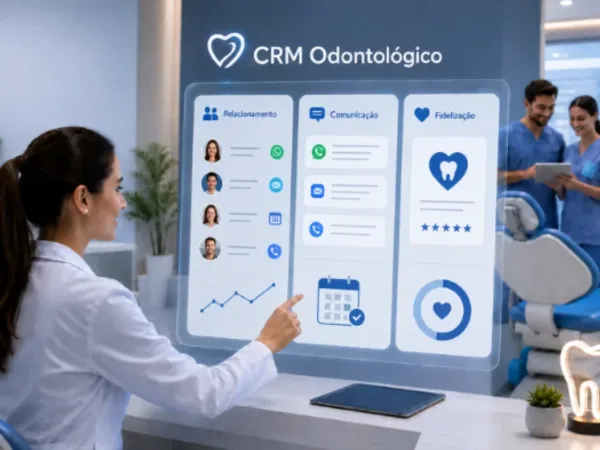
Freeing up time as a dental clinic owner starts with handing off the operational work you don't need to do yourself. When each task has a clear owner, a standard and a way to track results, you get your hours back for strategy, growth and the patient experience.
Delegating is one of the most important skills in a dental clinic, and one of the least developed.
Many owners and dentists end up keeping everything on their own desk because they believe:
- "It's faster if I do it myself"
- "Nobody does it as well as I do"
- "I can't lose control"
The result?
Overload, no time and growth that stalls.
If you always feel busy but never seem to move forward, the problem may not be a lack of effort. It may be a lack of delegation.
Why clinic owners find it hard to delegate
Delegating isn't just handing out tasks.
It's trust.
And that takes management maturity. Harvard Business Review's classic article Who's Got the Monkey? describes the trap well: managers who keep taking their team's problems back onto their own plate run out of time, while the team runs out of work.
The main reasons owners don't delegate are:
- No defined processes
- Fear of mistakes by the team
- Lack of training
- A culture where everything goes through the boss
- Unclear roles
A real-world example
A clinic where the dentist personally confirms appointments, organizes the schedule and solves administrative problems will have a hard time scaling.
The dentist becomes the bottleneck of their own growth.
The cost of not delegating
Not delegating is expensive, and the cost is often invisible.
Some direct effects:
- A disorganized schedule
- Delayed decisions
- An unmotivated team
- No standard way of doing things
- Low productivity
On top of that, the owner spends time on operational tasks and stops focusing on what really matters:
- Strategy
- Growth
- The patient experience
What delegating effectively really means
Delegating isn't "passing work along."
It's building a system where every person knows exactly what to do, how to do it and why.
Good delegation includes:
- Clear responsibilities
- Defined processes
- Proper training
- Follow-up with KPIs
Delegating well doesn't take control away.
It organizes control.
Step by step: how to delegate and get your time back
Here's a practical guide to put this into your daily routine.
1. List every activity in the clinic
Start by mapping everything:
- Patient service
- Finances
- Scheduling
- Follow-up after visits
This shows where your time is going.
2. Sort what can be delegated
Ask yourself:
- Does this task really need to be done by me?
- Could someone on the team do it with training?
Operational tasks can usually be delegated.
3. Assign clear owners
Avoid the classic mistake:
"Everybody does that."
When everyone is responsible, no one is.
Define:
- One person per task
- A backup, if needed
4. Create a standard way of doing it
Delegating isn't enough. You need to give direction.
Create:
- Checklists
- Patient call scripts
- Written procedures
That keeps the work consistent.
5. Train before you hold people accountable
Delegating without training sets people up to fail.
Invest time teaching:
- How to do it
- Why it matters
- What result to expect
6. Track results with KPIs
For example:
- Front desk response time
- Appointment confirmation rate
- How organized the schedule is
Management without follow-up turns into guesswork.
7. Give autonomy within limits
Let the team solve problems, but with clear criteria.
For example:
- They can reschedule appointments within defined rules
- They can resolve simple complaints without approval
That makes the clinic faster.
Common delegation mistakes to avoid
Even with structure, some mistakes come up often.
1. Delegating without explaining the context
The team needs to understand why the task matters.
2. Micromanaging
Delegating and then controlling every detail cancels out the process.
3. Not giving feedback
Without feedback, nobody improves.
4. Delegating only "small" tasks
Delegation also means handing off important responsibilities.
How technology supports delegation
Technology helps by organizing tasks and making them visible.
A clinic management system can help you delegate by:
- Centralizing clinic information, including new patient leads
- Defining responsibilities by role
- Recording completed activities
- Organizing patient service workflows
Tools with electronic patient records and schedule management also let each team member do their job with more autonomy and less dependence on the owner.
The key point: technology makes it easier, but management is what structures delegation.
Step out of day-to-day operations to grow
If you want your clinic to grow, you have to stop doing everything yourself.
Delegating is what lets you:
- Scale patient care
- Get more organized
- Reduce overload
- Improve results
Organized clinics don't depend on one person.
They run on processes.
If you feel overloaded and your clinic depends too much on you, start delegating better today.
With Pro365 GO, the new ProDent that runs 100% on the web, your team shares the same schedule, records and KPIs, so you can hand off work and still see what's getting done. Book a demo to see how it can give you time back.