To grow your dental clinic without losing control, you need to combine structured management with technology and make decisions based on data. Great clinical care isn't enough on its own: without organization, growth brings disorganization, rework and a weaker grip on the finances.
A well-managed dental clinic turns information into strategy, reduces waste and improves the patient experience at every point of contact. This article shows how management and technology work together so a clinic can scale with predictability.
The problem: growth without management creates chaos
Many clinics run into the same challenges as they grow:
- An overloaded, poorly distributed schedule
- No clear view of the finances
- Manual administrative processes
- Decisions based only on perception
Without structured data, the clinic runs on guesswork. In a dental office, that shows up as delays, communication breakdowns, unhappy patients and growth that's hard to sustain.
The solution: structured management backed by technology
Technology as the foundation of clinic management
A dental clinic management system lets you centralize:
- The schedule
- Clinical and administrative data
- The finances
- Performance indicators
Writing in Harvard Business Review, data quality expert Thomas Redman notes that academic research has found companies that see themselves as data-driven to be more profitable than those that don't. For a growing clinic, that's a strong reason to replace experience-only decisions with numbers.
Related reading: A weekly KPI review for your dental clinic
The numbers that keep growth under control
A data-driven clinic tracks indicators such as:
- Schedule occupancy rate
- Average revenue per patient
- Production per provider
- No-shows and cancellations
Using data improves internal processes and cuts rework, which has a direct impact on productivity.
Patient experience as a competitive advantage
The patient experience starts before the appointment. Organization, clear communication and punctuality directly shape how patients perceive value.
Patients tend to stay loyal to businesses that offer consistent, well-run experiences. In dentistry, organized clinics are able to:
- Reduce delays
- Strengthen relationships with patients
- Get more referrals
Related reading: How to retain and reactivate dental patients
What changes when management and technology work together
- More financial control
- Less rework
- An optimized schedule
- Safer decisions
- Predictable growth
A clinic that runs on clear processes and reliable data stops putting out fires and starts acting strategically. It can see financial bottlenecks, optimization opportunities and its most profitable services, and adjust quickly based on real numbers rather than the team's impressions.
Better data also makes marketing more efficient
When management is organized, marketing becomes more efficient. Data helps you understand:
- Your patients' profile
- Your most profitable services
- The periods of highest demand
That allows more targeted campaigns and a better return on investment.
First steps to grow with control
To start this shift:
- Map your current processes
- Eliminate parallel manual records
- Centralize information in one system
- Track basic indicators
- Use data in day-to-day decisions
Small adjustments add up to a big impact on results over time.
Organization is strategy, not just control
Combining management, technology and dentistry is no longer optional. Clinics that adopt data-driven management improve efficiency, offer a better patient experience and grow with confidence. Management and technology turn data into decisions, reduce risk and keep growth under control.
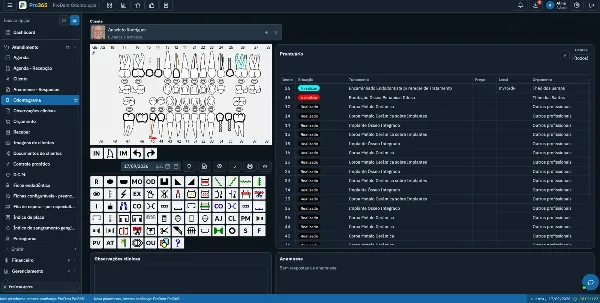
Pro365 GO, the new ProDent that runs 100% on the web, brings your schedule, finances, KPIs and management into one place, so growth doesn't cost you visibility. Book a demo to see it with your own workflow.