High-value vs. high-risk dental patients: not every filled slot is worth the same. A high-value patient shows up, finishes treatment, pays on time and refers others, while a high-risk patient keeps missing, rescheduling and leaving balances open. Telling the two apart with data lets you protect your best time slots.
Why not every patient is strategic for your schedule
The first step toward efficient management is accepting that a booked slot isn't automatically a good one. Some behavior patterns quietly erode the efficiency of your schedule.
Patients who often miss appointments, keep rescheduling, don't complete treatment or build up unpaid balances can cost more than they bring in.
Picture a patient who accepts a high-value treatment plan. At first glance, they look profitable. But if that same patient reschedules four times, arrives late and leaves gaps in prime-time slots, they're undermining your schedule's productivity. They may pay on time, but the operational cost of keeping them drains profitability.
That's where clinic management software becomes a strategic ally, helping you clear bottlenecks out of the schedule.
Use a patient summary instead of guesswork
Managing time slots on gut feeling is risky. You can't decide who gets a same-day opening based on how friendly the patient is. You need data.
A patient summary is a key tool for cleaning up the schedule because it brings together:
- Appointment history
- Late arrivals and no-shows
- Treatments
- Referrals
- Financial status
With that information, the clinic can judge a patient's behavior and reliability in seconds. Good schedule management means seeing the risk before it becomes an empty chair.
High-value vs. high-risk: the impact on your routine
To protect your schedule, start by defining the two profiles clearly.
1. The high-value patient
A high-value patient isn't just someone who spends a lot. It's the profile that stabilizes your routine:
- Attendance: shows up to appointments and respects the schedule.
- Commitment: completes the proposed treatment.
- Reliability: keeps payments up to date.
- Referrals: sends new patients your way to fill your openings.
These patients bring predictable revenue, a stable schedule and lower operating costs.
2. The high-risk patient
The high-risk patient sends warning signs that throw the whole clinic off:
Instability: a history of frequent no-shows, late arrivals and constant rescheduling.
Discontinuity: interrupted treatments and forgotten treatment plans.
Late payments: recurring overdue balances.
This profile drives up the no-show rate, fills the schedule with idle time and makes revenue unstable.
| Criterion | High-value patient | High-risk patient |
|---|---|---|
| Attendance | Shows up consistently | Frequent no-shows |
| Commitment | Completes treatment | Abandons treatment |
| Payments | Pays on time | Frequent overdue balances |
| Impact on the schedule | Stable | Creates gaps |
| Referrals | Frequent | Rare or none |
| Operating cost | Low | High |
This kind of analysis is only possible when the data is centralized and easy to read.
How to schedule each profile
Identifying the profile is just the diagnosis. The results come from acting on each group.
Give high-value patients your best slots
For the patients who sustain your clinic, offer the best of your schedule:
Prime-time slots: give them priority for the most sought-after times, such as early morning or late afternoon.
Continuity: offer maintenance plans and book checkups in advance.
Relationship: strengthen the bond and encourage referrals.
Protect your schedule from high-risk patients
You don't need to dismiss the patient. You need to protect your schedule:
Firmer confirmation: confirm their appointments more rigorously.
Financial safeguards: adjust your policies, for example by asking for a deposit to hold longer appointments.
Alternative times: rethink the slots you offer and avoid blocking peak hours for less reliable patients.
These steps cut no-shows and make the schedule more dependable.
Why this matters in a competitive market
When patients are classified with data, the clinic plans its schedule better, cuts hidden losses and becomes more predictable. In competitive markets, professional schedule management is a real differentiator: clinics that master their own data can grow without losing control.
A data-driven schedule protects every slot
Using a patient summary strategically means deciding better who to see, how and when. A smart dental schedule isn't about filling every slot. It's about making sure each filled slot delivers a reliable return. The right system doesn't just help you see patients; it helps you grow safely.
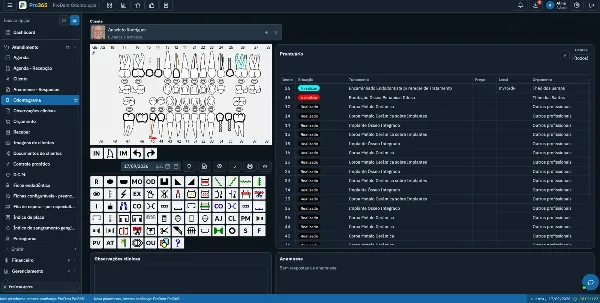
Pro365 GO, the new ProDent that runs 100% on the web, puts each patient's appointment history, treatments and financial status in one place, so your team can schedule with data instead of guesswork. Book a demo to see how it works.