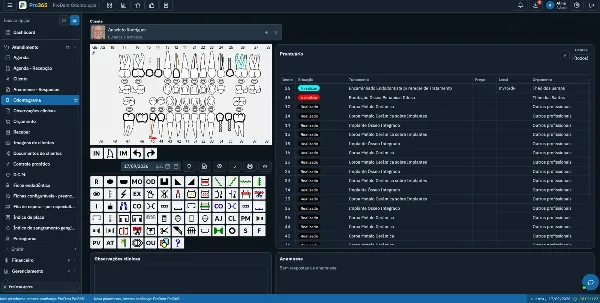

Weekly goals give your dental clinic team a short cycle to plan, act, check and adjust, so problems get fixed before the month is over. Break the monthly target into weekly goals for each area, track them on a simple board and review them in a short meeting every week.
Many clinic owners set only monthly or annual goals. The problem is that, without a weekly breakdown, follow-up feels distant and corrections arrive too late.
The consequences are familiar:
- A disorganized schedule
- Lower productivity
- Unstable revenue
- A team without direction
- Improvised decisions
In this article, you'll learn how to set up weekly goals in a practical way and build an efficient management routine for your clinic.
Why weekly goals work better
Annual goals matter, but weekly goals drive action.
When the manager works in short cycles:
- The team stays focused
- Problems are corrected quickly
- Revenue becomes more predictable
- Motivation goes up
Weekly goals are closely tied to the PDCA cycle (Plan, Do, Check, Act), a method widely used in management for continuous process improvement. PDCA proposes a structured loop of planning, execution, checking results and correcting course.
When a clinic works with weekly goals, it's applying PDCA in a practical way: it plans the week with clear objectives, carries out the planned actions, checks the KPIs at the end of the period and adjusts for the next week. That model reduces improvisation, increases predictability and strengthens a data-driven management culture.
Which KPIs to track each week
Before setting goals, choose clear KPIs.
Key weekly metrics:
- Revenue collected
- Number of completed visits
- No-show rate
- Treatment plan acceptance rate
- Average revenue per visit
This data shows whether the clinic is on the right track.
Step-by-step: how to set weekly goals
Now for the practical part.
Step 1: Set the monthly goal
For example, a monthly revenue target for the clinic.
Divide it by four weeks to get a baseline.
Step 2: Set specific goals for each area
- Front desk: cut no-shows by 10%
- Treatment coordinator: increase treatment plan acceptance
- Clinical team: make better use of chair time
Goals should be objective and measurable.
Step 3: Create a tracking board
It can be physical or digital.
Include:
- The week's goal
- The result achieved
- The gap
- The action plan
This creates transparency.
Step 4: Hold a short weekly strategy meeting
A quick, 30-minute meeting:
- Review the numbers
- Identify bottlenecks
- Decide on adjustments
- Reinforce priorities
First, look at the data. Next, find what went wrong. Then adjust quickly.
Organizing the schedule and reducing no-shows
Weekly goals depend on an organized schedule.
Practical actions:
- Confirm appointments 24 hours in advance
- Keep a short-notice list for same-day add-ons
- Spread long procedures strategically
- Monitor idle slots
The schedule is the engine of revenue.
Without organization, goals aren't met.
Read also: How automated appointment reminders help reduce no-shows
Team productivity and standard routines
Goals only work when there's a standard.
Define:
- A script for patient conversations
- A clear billing workflow
- Individual responsibilities
- KPIs for each role
That way, the clinic stops depending on improvisation.
Where dental software fits in
In a weekly goals routine, dental clinic software is a support tool, not the main character.
It lets you:
- Generate automatic weekly reports
- Track the no-show rate
- Monitor revenue in real time
- Organize the schedule
- Analyze productivity by provider
The software provides reliable data for fast decisions.
Without organized data, a goal is just an intention.
Consistency turns weekly goals into results
To keep the routine going:
- Set a fixed day for the meeting
- Record the decisions made
- Track weekly progress
- Compare results with the monthly goal
Discipline beats motivation.
Weekly goals change how a clinic is managed. When there are:
- Clear KPIs
- An organized schedule
- An aligned team
- Strategic meetings
- Dental software supporting data analysis
The clinic runs with focus, predictability and sustainable growth.
With Pro365 GO, the new ProDent that runs 100% on the web, the schedule, billing and management KPIs your weekly goals depend on live in one place. Book a demo to see how it supports your team's weekly routine.