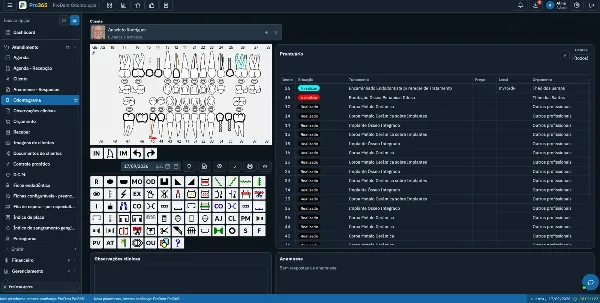
Dental software adoption is measured by how the team uses the system every day, not by whether it was purchased, installed or covered in an onboarding session. The clearest way to tell is to check concrete signs: an up-to-date schedule, complete patient records, billing that matches reality, treatment plans with follow-up and KPIs that make sense.
The result shows up when the team uses the system daily to make better decisions, record information consistently, cut rework and keep the clinic routine more predictable.
That's why adoption needs to be tracked closely. Asking whether the team "is using it" isn't enough. When the answers to the questions above are clear, the owner stops relying on impressions and sees how the system is really used.
What does dental software adoption mean?
Dental software adoption is the degree to which the team builds the system into the clinic's routine.
It goes beyond logging in. A clinic can have users set up, a schedule open and modules available, and still run on side notes, scattered messages, external spreadsheets and decisions based on memory.
Real adoption happens when the system becomes the main source of truth for operations. The front desk schedules and confirms correctly. The dentist documents the visit. Billing records income, expenses and payments. The treatment coordinator follows up on leads and treatment plans. Management checks reliable KPIs.
When every department uses the system consistently, the clinic gains organization, traceability and better data for decisions.
Sign 1: the schedule shows how the clinic really runs
The schedule is one of the first places to measure adoption.
If the schedule is incomplete, out of date or depends on confirmations handled outside the system, the clinic loses operational visibility. The front desk may know "by heart" what's going on, but management can't measure no-shows, add-ons, cancellations, productivity by provider or how well appointment slots are filled.
Useful questions to ask:
- Is every visit recorded in the schedule?
- Are statuses for arrival, in treatment, completed, no-show or rescheduled kept up to date?
- Are automated confirmations used in a standard way?
- Can the team spot open time and chances to fit patients in?
- Does the schedule help organize the day, or is it just a calendar?
In ProDent, features like the schedule, automated confirmations and the front desk view help turn booking into daily control of operations, not just a list of time slots.
Sign 2: patient records don't depend on memory
Another key sign of adoption is the quality of the digital patient record.
When the team uses the system correctly, the patient's history is more complete: medical history, clinical notes, images, documents, prescriptions, work or school notes, consent forms, treatment plans and relevant observations. That improves continuity of care and reduces reliance on scattered information.
The central question is simple: if another provider had to take over the case, would they find enough context in the system?
If the answer is no, there's an adoption gap.
The patient record needs to work as a living history, not a file filled in only when someone remembers.
Sign 3: billing reflects the real numbers
One of the biggest risks of low software adoption is in billing.
If the team doesn't correctly enter treatment plans, payments, expenses, overdue accounts, provider payouts and transactions, reports stop representing the clinic's reality. The owner looks at the numbers, but the numbers don't tell the truth.
Some warning signs:
- payments recorded outside the system;
- expenses entered late;
- accepted treatment plans with no financial follow-up;
- overdue accounts tracked by hand;
- provider payouts calculated in side spreadsheets;
- KPIs that don't match the bank balance.
When billing data is entered with discipline, the system starts supporting decisions about revenue, costs, predictability, collections and growth.
Sign 4: leads and treatment plans don't get forgotten
Adoption also shows up in patient follow-up.
Many clinics lose opportunities not because of a lack of demand but because of a lack of process. The patient gets in touch, comes in for an exam, receives a treatment plan, says they'll think about it and disappears from the team's routine.
A well-used system helps record leads, track stages, create follow-up tasks and keep a history of contacts. That way the CRM stops being just a list of names and starts telling the team who needs attention.
To assess adoption here, check:
- Are leads recorded with their source and interest?
- Do pending treatment plans get follow-up?
- Is someone responsible for the follow-up?
- Does the team use tasks instead of relying on memory?
- Are campaigns and opportunities filtered with clear criteria?
When the CRM is really used, the clinic gains predictability in case acceptance and cuts silent losses.
Sign 5: documents and signatures are part of the visit workflow
Digital documents are another strong way to gauge how mature the clinic's use of the system is.
If contracts, consent forms, authorizations, prescriptions, notes and forms are still printed, saved in loose folders or sent without a proper record, the clinic isn't using the system's full potential.
Adoption improves when the team knows:
- which documents to use at each stage;
- who is responsible for creating and sending them;
- when to collect an electronic signature;
- where the file is stored;
- how to find the document later.
In ProDent, documents, patient records and electronic signatures can support a more organized routine, as long as the workflow is clear to the front desk, dentists and billing.
Sign 6: KPIs are checked regularly
KPIs only have value when they're reliable and used for decisions.
A clinic with good adoption doesn't look at reports only when there's a problem. It tracks the schedule, production, treatment plans, payments, expenses, no-shows, overdue accounts and productivity as part of its management routine.
The key is turning data into practical conversations:
- Why did schedule utilization drop?
- Which providers or specialties had the best production?
- How many treatment plans are stalled?
- Did overdue accounts go up in any period?
- Are no-shows affecting revenue?
- Is the team recording everything the KPI needs to be reliable?
With management KPIs and support from Pro365 AI, the clinic can read its data more clearly and spot bottlenecks faster.
Sign 7: the team asks for less help with repetitive tasks
A good sign of adoption is team autonomy.
That doesn't mean no one needs support. It means the team handles common tasks with more confidence: registering patients, confirming appointments, documenting visits, creating documents, following up on treatment plans, recording payments and checking reports.
The Pro365 AI Instructor, for example, can support this within the routine, helping users understand how to complete tasks in ProDent. When the team learns to look for guidance and follow the steps, the system stops being an obstacle and becomes a work tool.
How to improve adoption in practice
To improve dental software adoption, start by reviewing the routine department by department.
Don't try to fix everything at once. Choose the points with the most impact on operations. In many cases, the first adjustments should cover the schedule, billing and patient records, because those areas directly affect patient care, revenue and clinical continuity.
Then set simple agreements:
- what needs to be recorded;
- who owns each step;
- when the information should go into the system;
- which reports will be tracked;
- which modules are still underused;
- what kind of training or consulting the team needs.
This follow-up can happen in short meetings focused on continuous improvement. The goal isn't to pressure the team in general terms, but to understand where the process is failing and fit the system to the clinic's real routine.
Adoption shows in the quality of the data, not the number of logins
Dental software adoption shouldn't be measured only by the number of logins or by the fact that the clinic dropped some of its paper.
It shows in the quality of records, the reliability of KPIs, an organized schedule, patient follow-up, accurate billing and the team's autonomy.
When the system is used as a whole, the clinic gains clarity to care for patients better, collect better, follow up better and decide better.
Pro365 GO, the new ProDent that runs 100% on the web, combines technology, personalized consulting, people-first support, built-in AI and features designed for real dental clinic routines. Book a demo to talk with our team.