
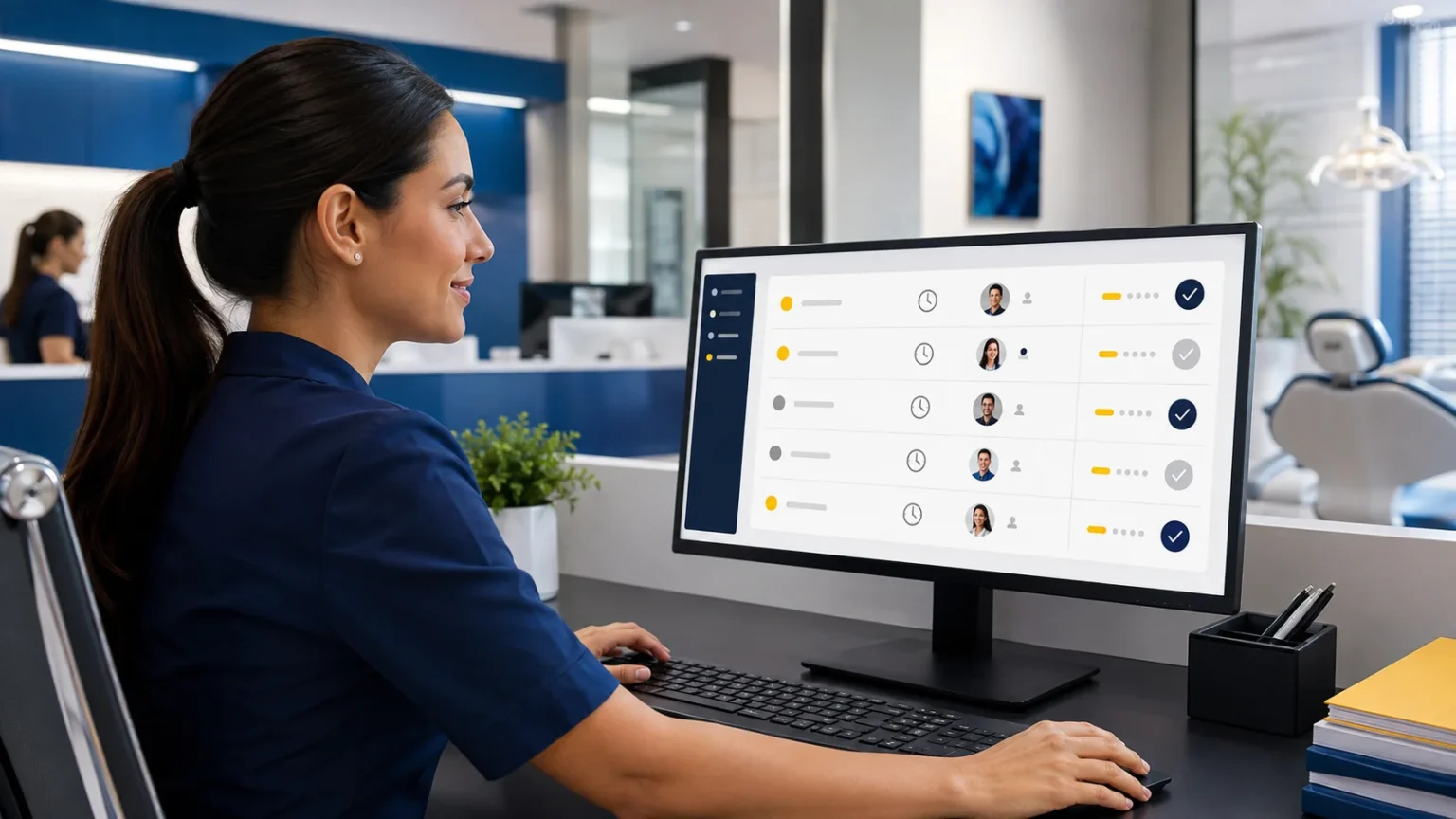
Task management in dental software turns every loose follow-up into a defined action with a reason, a date, an owner and an alert. In ProDent, Patient Tasks do exactly that, and a simple daily routine of triage, execution and closing keeps those alerts from piling up.
An overdue task rarely looks serious on its own. It might be a call to a patient who still hasn't sent an X-ray, confirming a document, following up on a treatment plan or an item that should have moved from the front desk to another department. The problem shows up when these small delays add up, lose context and start depending on someone's memory.
In ProDent, the Patient Tasks feature lets you record the reason, date, time and owner, which can be a user, a department or the whole team. At the scheduled time, the system sends an alert, and the task can be linked to earlier notes to keep the context.
The real gain isn't creating more reminders. It's setting up a routine where the team knows what needs to be done, when to act, who handles it and what information should stay in the patient's history.
What a patient task needs to answer
A useful task should give the person who receives it four clear answers:
- What action needs to be taken
- Why it's needed
- When it should happen
- Who is responsible
When one of these is missing, the alert loses its power. A description like "talk to patient" requires a new investigation before the call even happens. "Confirm we received the X-ray before Thursday's evaluation" gives a reason, an expected result and a clear deadline.
In ProDent, the task is linked to the patient, which shortens the distance between the follow-up and the history needed to complete it. The team stops working from generic reminders scattered across paper, chats and side calendars and starts following individual actions inside one shared routine.
Start of the shift: a short, focused triage
The first step of the daily routine is triage. Before messages, calls and schedule changes take over the team's attention, review the tasks for the period and organize the work.
Start with what's overdue
An overdue task needs a decision, not just a new date. The team should check whether the action still makes sense, whether the patient already answered through another channel, whether the context changed or whether the owner needs to change.
Rescheduling without reviewing only hides the delay. The new date should reflect an updated decision.
Separate urgent from important
Not every task close to its time has the same impact. An item that affects an appointment already on the schedule may need action before a sales follow-up with a more flexible deadline. Priority should consider continuity of care, the commitment made to the patient and dependence on other departments.
The software organizes the alert, but the clinic still needs internal priority rules. That agreement keeps each person from reading urgency differently.
Confirm who really owns it
Assigning a task to a user makes sense when one person is clearly responsible. Assigning it to a department may work better when any trained member can do it. A task sent to the whole team needs care, because ownership that's too broad can create the impression that someone else will handle it.
Before the shift starts, check that every important action is routed in a way that fits the clinic's routine.
During the day: act with the patient's context
The alert tells you when to act, but the quality of the work depends on context. Linking the task to earlier notes helps the team understand what already happened and keeps the patient from having to repeat information.
Here are four practical situations.
A document that hasn't arrived
If the patient needs to send an X-ray, a document or other information before a step in their care, the task can record the missing item, the agreed date and who will reach out. When the alert fires, the person already knows what to ask for and why it's needed.
After the contact, record the outcome. If the item will arrive later, define the next action with a new, realistic deadline.
Treatment plan follow-up
A treatment plan with no follow-up can stall even when the patient is still interested. The task marks when to reach out and assigns the action to the treatment coordinator or the front desk, depending on how the clinic works.
Here, the history prevents duplicate outreach and keeps the conversation going. When the opportunity needs stage-by-stage follow-up, ProDent's CRM can complement the task routine with a view of the sales pipeline.
An open item between the front desk and the clinical team
Some actions start in one department and depend on another. The front desk may spot a question or a missing document, while the answer depends on the clinical team. Recording the reason and routing the task to the right owner cuts down on loose messages and makes the handoff easier.
The feature doesn't replace the clinical record or the dentist's evaluation. It organizes the operational action needed for the workflow to move forward clearly.
A follow-up you promised the patient
When the clinic promises to get back to a patient on a specific date, the task turns that promise into a visible action. The alert helps you keep the timing, and the link to the history lets you pick up the conversation where it left off.
That matters for both the patient experience and team productivity, because it cuts down on searching, repetition and out-of-context calls.
End of the shift: close the loop on every action
A task isn't done when someone opens the alert. It's done when there's a recorded outcome and, when needed, a defined next action.
At the end of the shift, the team can review three situations:
- Completed tasks, with the outcome recorded in the right place
- Tasks waiting on a reply, with a new deadline and owner
- Tasks not done, with the reason for the delay and a decision on priority
This closing step prevents two common mistakes: marking as done an action that still depends on a reply, and leaving open a task that no longer has a purpose.
When the action produces information that matters for the patient relationship, a note helps keep the context. When it involves clinical information, the content belongs in the right section of the patient record, following the clinic's routine and professional responsibility.
Five team agreements for using Patient Tasks consistently
1. Write the task with a verb and an expected result
"Confirm the document was sent" beats "document." The description should guide the work without needing extra interpretation.
2. Pick a date that marks when to act
The deadline shouldn't just be the date the problem becomes urgent. It should show when the team still has time to act well.
3. Choose an owner that fits the process
User, department and team each have different uses. The clinic should define when each option applies and who takes over the task during absences or shift changes.
4. Set fixed review times
Alerts help, but they don't replace a follow-up routine. A short review at the start of the shift and another at closing make tasks part of the work, instead of a list you check only when there's spare time.
5. Record the outcome before closing
Done, rescheduled or reassigned, every outcome needs to leave a clear trace. That way the next person can continue without piecing the story together from side conversations.
How Patient Tasks connect to the rest of ProDent
In ProDent, clinic management brings together the schedule, digital history, patient records, CRM, WhatsApp, financials, reports and other operational features.
In practice, that shared context lets tasks support different routines:
- The front desk follows up on documents, confirmations and callbacks
- The treatment coordinator organizes contacts tied to opportunities and treatment plans
- The clinical team receives operational follow-ups related to patient care, without mixing tasks with clinical records
- Management sees where actions go overdue, change owners or never get an outcome
WhatsApp can support communication with patients, while the history and notes keep the relevant information. The CRM organizes sales follow-up, and tasks give specific actions a deadline and an owner. Each feature has a role, and the clinic gains clarity when it defines how they work together.
How to tell if the routine is working
You don't need a complex dashboard to start. A few operational signs already show whether adoption is improving:
- Fewer overdue tasks with no explanation
- Fewer duplicate contacts with the same patient
- Fewer items sent back for lack of context
- Clearer handoffs between shifts or owners
- A higher share of tasks closed with a recorded outcome
- Less reliance on paper, personal messages and individual memory
These signs help management see whether the problem lies in the setup, priorities, training or team capacity. The software provides the structure, but consistency depends on usage agreements and regular review of the routine.
Turn alerts into a routine that moves forward
Patient Tasks in ProDent don't have to be just digital reminders. When reason, deadline, owner, alert and history work together, every follow-up gets a clear path to completion.
For the clinic, that means less dependence on memory, better continuity between departments and more control over what was promised to each patient. For the team, it means starting the shift with clearer priorities and ending the day with fewer open actions waiting on a decision.
Map three follow-ups that keep coming back in your clinic and define how they should be recorded, routed and closed.
With Pro365 GO, the new ProDent that runs 100% on the web, tasks, alerts and patient history live in the same place your team already works. Book a demo to see Patient Tasks applied to your routine.


