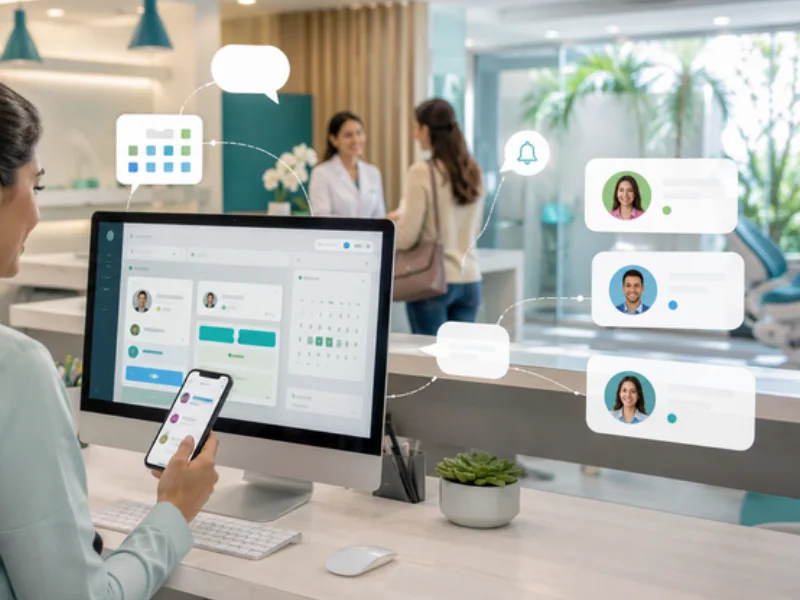
Dental software with WhatsApp integration turns WhatsApp from a loose chat channel into part of how your clinic runs. Reminders, confirmations, campaigns and treatment plan follow-ups go out from the same system that holds the schedule, CRM and patient history, so the team stops relying on memory and manual tracking.
WhatsApp is already part of daily life at many dental clinics. It's where patients ask questions, confirm appointments, ask to reschedule, get instructions and pick up treatments they had put on hold.
The problem is that when this communication lives apart from the clinic's system, the team loses history, repeats messages, forgets follow-ups and depends too much on manual tracking. That's why choosing software with WhatsApp built in is no longer just about convenience. For clinics that want to grow in an organized way, the integration ties together patient care, scheduling, CRM, billing and patient relationships in a more predictable routine.
What is dental software with WhatsApp integration?
It's a clinic management system that lets you use WhatsApp as part of the clinic's operations, not just as a separate messaging channel.
In practice, that means the team can send reminders, confirmations, campaigns and follow-ups, sales messages and instructions automatically, based on information already recorded in the system.
Instead of hunting for data in spreadsheets, side calendars or old chats, the clinic works with communication that's connected to the patient's history, the schedule, treatment plans, the CRM and billing.
Why WhatsApp on its own gets in the way
Using WhatsApp at the clinic isn't the problem. Using it without a process is.
When each front desk team member handles chats their own way, the clinic starts running into gaps such as:
- patients who never confirmed their appointment;
- forgotten follow-ups;
- treatment plans sent with no follow-up;
- duplicate or out-of-context messages;
- lost history when someone leaves the team;
- trouble knowing who replied, who missed and who needs another contact;
- too many manual tasks at the front desk.
Over time, this hits the schedule, revenue and the patient experience directly. A clinic can have plenty of contacts coming in through WhatsApp and still lose opportunities for lack of organization.
Where built-in WhatsApp helps a dental clinic most
Good dental software with WhatsApp shouldn't just "send messages." It needs to support key stages of the patient journey.
1. Appointment confirmation
Confirmation is one of the most important uses. With WhatsApp connected to the system, the clinic can send confirmation messages before the visit and track who confirmed, who didn't reply and who needs a call from the front desk.
That reduces no-shows, makes the schedule more predictable and helps the team act before a slot goes empty.
2. Appointment reminders
A reminder does a different job than a confirmation. It helps patients plan right after booking, so they don't schedule something else at the same time or forget the date.
When reminders and confirmations work together, the schedule is better protected against no-shows and last-minute changes.
3. Patient reactivation
Many clinics have a large list of past patients who never came back. With an integrated system, you can filter inactive patients, people who missed appointments, birthdays, patients with pending treatment or contacts with a treatment plan under consideration.
From those filters, the clinic can send more strategic WhatsApp messages with clear context and purpose. That turns the database into a relationship tool instead of a list that just sits there.
4. Treatment plan follow-up
One of the biggest sales bottlenecks in a dental clinic is treatment plans that never get a reply.
The patient says they'll think about it, wants time to consider or simply doesn't answer. Without a follow-up process, those opportunities disappear. With automated campaigns, follow-up messages go out without anyone on the team lifting a finger, reminding the patient of the proposal.
5. Post-visit care
The relationship doesn't end when the patient gets out of the chair. Post-visit messages can share care instructions, reinforce follow-up visits, remind patients about checkups, track open items and keep the clinic present in a professional way.
When this contact is tied to the patient record, the schedule and the patient's history, communication becomes safer and more consistent.
6. Billing and payment reminders
WhatsApp can also support the billing routine, as long as it's used carefully and in an organized way.
Payment due reminders and contacts about overdue balances need a clear process, recorded in the patient history and connected to the clinic's financial system. That avoids improvised approaches and makes collections more predictable.
What to evaluate when choosing dental software with WhatsApp
Not every system that "has WhatsApp" solves the clinic's routine. The key is whether the feature is connected to practice management or works only as a shortcut to open a chat.
Before you choose, check whether the software lets you:
- connect WhatsApp to the clinic schedule;
- send appointment reminders and confirmations;
- segment patients by status, history or opportunity;
- track leads and treatment plans in a CRM;
- log tasks and follow-ups;
- connect communication to the patient's history;
- run relationship campaigns;
- organize information for the front desk, sales, billing and management;
- reduce manual work for the team;
- see attendance, conversion and opportunities more clearly.
The best system isn't the one that sends the most messages. It's the one that helps the clinic communicate better, with less rework and more control.
Does WhatsApp integration improve the patient experience?
Yes, when communication is well planned.
For patients, the experience improves because they get information on a channel they already use every day. They can confirm appointments, receive instructions, remember times and stay in touch with the clinic easily.
For the team, the improvement comes from organization: fewer lost messages, fewer repeated questions, less reliance on memory and more clarity about what needs to be done.
That combination directly shapes how professional the clinic looks. Fast, contextual, well-recorded communication signals care. Confusing communication signals disorganization.
How ProDent supports this routine
HartSystem's ProDent connects WhatsApp to different parts of dental clinic management. Day to day, that can support:
- scheduling with reminders and confirmations;
- communication with patients before the visit;
- Fast-in for digital intake forms;
- a CRM to track leads and opportunities;
- campaigns and filters for patient relationships;
- patient reactivation;
- treatment plan follow-up;
- an organized patient history;
- support for the front desk, billing and management routines.
HartSystem also pairs technology with hands-on support and personalized consulting, which matters for clinics that don't just want to buy a system but actually want to put it to work every day.
The data that shows why this integration matters
Messaging apps are already the dominant way people communicate. According to GWI data in the DataReportal global report, 93.6% of online adults use chat and messaging apps every month.
That helps explain why WhatsApp has become so relevant for dental clinics that use it. Patients are already used to handling appointments, asking questions and getting information by message.
Built-in WhatsApp doesn't replace a process
To be clear: WhatsApp integration won't fix a disorganized routine on its own. It has to be part of a well-defined process. The clinic should know:
- who answers each type of message;
- when to send reminders and confirmations;
- how to follow up with patients who didn't reply;
- how to log opportunities;
- when to follow up on a treatment plan;
- which campaigns to send to each patient profile;
- how to measure whether communication is improving the schedule and conversion.
When the system helps structure that process, WhatsApp stops being just a chat channel and becomes a management tool.
The value is in connecting WhatsApp to the whole clinic
Dental software with WhatsApp integration is a strategic choice for clinics that want to organize patient communication, reduce no-shows, follow up on opportunities and make the team more productive.
The real value isn't in sending messages. It's in connecting WhatsApp to the schedule, the CRM, billing, the patient history and the clinic's processes.
With Pro365 GO, the new ProDent that runs 100% on the web, WhatsApp communication and clinic management work in one place. Book a demo to see it in action.