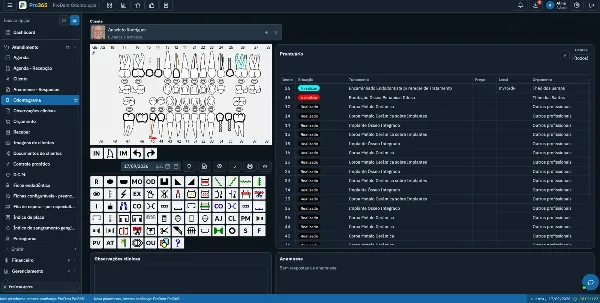

Every dental office needs four essential processes: scheduling, patient care, financial control and post-visit follow-up. With each one defined, documented and followed, the clinic stops depending on specific people and runs the same way every day. Below you'll find what each process should include, how to build it and how to roll it out without stalling the team.
The problem with management without processes
Many dental clinics face a silent problem: everything works… until someone is absent, makes a mistake or leaves the team. That happens because the operation depends on people, not processes. In practice, that leads to:
- disorganization
- rework
- gaps in patient care
- lost patients
- difficulty growing
Without clear processes, clinic management becomes reactive. You solve problems all the time, but you don't move forward.
What clinic management really involves
Clinic management isn't just running the schedule or the finances. It's structuring the clinic to run with predictability, quality and efficiency. That involves:
- defining processes
- organizing routines
- tracking indicators
- managing the team
- standardizing patient care
Why processes matter in a dental office
Processes make sure things work the same way every day. Without them:
- each team member does things their own way
- mistakes increase
- the time each task takes varies
- quality is inconsistent
With well-defined processes, you gain:
- standardization
- predictability
- efficiency
- easier training
The essential processes every dental office should have
Scheduling
- a standard time per procedure
- appointment confirmation
- an organized schedule
Patient care
- greeting and check-in
- preparation
- checkout
Financial
- recording payments
- following up on overdue balances
- the daily close
Post-visit follow-up
- patient follow-up
- recall reminders
- ongoing relationship
How to build an efficient process: a practical guide
Building processes doesn't have to be complicated. Here's a simple method.
1. Identify the critical activities
Start with the most important areas:
- patient care
- scheduling
- billing
- post-visit follow-up
2. Observe how tasks are done today
Before changing anything, understand the current reality. Ask:
- How is this done today?
- Where are the mistakes?
- Where are the delays?
3. Define the best flow
Create a simple step-by-step. Example for the first visit:
- greet the patient
- confirm their information
- route them to the clinical team
4. Document the process
It doesn't need to be complex. It can be:
- a checklist
- a simple step-by-step
- clear instructions
5. Train the team
Explain:
- how to do it
- why it's done
- what standard is expected
6. Follow the execution
Check whether the process is being followed, and adjust when needed.
7. Keep improving
A good process is one that gets adjusted. Review it often.
How to roll out processes without stalling the team
A common mistake is trying to change everything at once. That creates resistance. The better path:
- start with one process
- test it
- adjust it
- expand gradually
Also:
- involve the team
- listen to suggestions
- show the benefits
The role of technology
Technology helps keep processes organized and running. Dental clinic management software can support:
- standardized workflows
- record keeping
- task follow-up
- reporting
That reduces failures and improves control over the operation.
Processes build results, luck doesn't
Efficient clinic management doesn't depend on extra effort, but on organization. With well-defined processes, your clinic will:
- run predictably
- make fewer mistakes
- improve the patient experience
- grow in a structured way
Without processes, you depend on luck. With processes, you build results. Start today by creating one simple process in your clinic.
Pro365 GO, the new ProDent that runs 100% on the web, supports your scheduling, financial and follow-up processes in one system. Book a demo to talk with our team and see it in your routine.