
The patient financial experience is the gap between understanding a treatment and being able to say yes to it. A dental clinic improves it by making estimates clear, offering payment options within a defined policy and keeping the agreement intact all the way to collection.
A patient can leave the exam convinced the treatment is needed and still put it off. Not because they doubt the dentist, but because they aren't sure how much they'll pay, what's included, when each phase happens or who to call if they need to revisit the terms.
For the clinic, this shouldn't be treated as a sales detail. It's part of the patient journey, and it affects trust, case acceptance, predictability of collections and the quality of the relationship.
The topic calls for care. A clinic shouldn't turn financial vulnerability into sales pressure, and it shouldn't loosen terms without knowing its margin, risk and cash position. The management work is balancing both sides: reducing uncertainty for the patient while keeping the business sustainable.
What the patient calls price, the clinic should see as a journey
The World Health Organization includes patient-reported experience among the dimensions used to assess care performance. In a tool published in 2025, WHO organizes 16 indicators across domains such as accessibility, continuity, coordination, people-centred care and care planning. For a dental clinic, the takeaway is direct: the experience doesn't end when the clinical explanation is done well. It continues in how the estimate, treatment phases, responsibilities and follow-up contacts are coordinated.
The OECD's PaRIS 2025 report looks at primary care through patients' eyes, and themes like trust, time and care adapted to the person's needs come up again and again. It covers primary care systems and shouldn't become a numeric target for a dental clinic. It's still a useful management lens. A payment option can be financially viable and still be a poor experience if it comes too late, is explained in a confusing way or ignores where the patient actually is.
Access puts the topic in perspective. WHO estimates that 2.1 billion people faced financial hardship from out-of-pocket health spending in 2022. That's a global figure, not an estimate for dentistry. The practical decision isn't to cut prices across the board. It's to stop reading every hesitation as lack of interest and build a conversation that can tell apart a clinical question, a lack of clarity, a timing conflict and a real financial limit.
There's also evidence that communication and financial difficulty go together. A study in the American Journal of Preventive Medicine, based on 28,955 observations of U.S. adults, found that low-quality communication with a provider was associated with a higher likelihood of difficulty paying medical bills the following year. The estimated difference was 4 percentage points, controlling for baseline characteristics and outcomes. The design is observational, so it doesn't prove a better conversation removes payment difficulty. It does support a useful conclusion: clarity isn't decoration. It's a process variable you can track and improve.
The patient financial journey has five moments that need to share the same context
1. Before the estimate, know your limits
Flexibility without a policy feels like good service until cash flow feels the impact. Before offering a discount, a down payment, a payment plan or phased treatment, management needs to know costs, target margin, taxes and fees, collection capacity and the criteria for exceptions. If your fees haven't been reviewed recently, start with a dental fee pricing review.
In practice, this changes an important routine. The person presenting options to the patient shouldn't make them up during the conversation. They need to work within options approved in advance, know what they can adjust and recognize when a decision should go to the office manager or owner. The policy protects your margin, and it also protects the patient from getting different answers depending on who's at the front desk or what time it is.
2. When presenting, clarity beats information overload
A good financial presentation answers six questions without hedging: what's the amount, what's included, what could change, what are the phases, which payment options are available and what's the next step. If insurance is involved, the patient should also understand what's expected to be covered and what they'll owe. Handing over a total and asking "ready to schedule?" isn't enough.
The Healthcare Financial Management Association organizes a good financial experience into four areas: price transparency, patient financial communications, medical debt resolution and consumer education. Its patient-friendly billing resources aim for bills that are clear, concise, correct and patient-friendly. The test of quality is simple: the patient needs to understand the message and know what to do next.
Clarity is also a matter of governance. Put estimates in writing, itemize them and check your documents and clinics with qualified legal counsel for the rules that apply in your state. You don't have to wait for a dispute to adopt a simple rule: whatever was explained should be retrievable later.
3. Between the question and the decision, the next step can't disappear
After the presentation, some patients need to talk with family, sort out dates or think about how to pay. That time shouldn't turn into sales chasing, but it doesn't have to turn into operational silence either.
The minimum record is an agreed follow-up: who will reach out, when, through which channel the patient authorized and which question is still open. The goal of the follow-up isn't to repeat the same offer. It's to bring back the context. If the issue is timing, the conversation is about timing. If it's understanding the treatment plan, the question goes back to the dentist. If it's the payment terms, the team works within the approved policy.
This distinction improves your conversion metric because it separates reasons that usually end up in a generic "didn't accept" bucket. Without a recorded reason, management might lower prices when the problem was trust, push for more messages when the problem was clarity, or pressure the front desk for a decision that depended on a clinical explanation.
4. During payment, unnecessary effort becomes operational risk
The approved agreement needs to survive the handoff between the front desk, billing and collections. Amounts, due dates, chosen payment method, receipts, changes and contacts shouldn't depend on the memory of whoever negotiated.
That continuity reduces two risks at once. For the patient, it lowers the chance of getting a bill without context or having to re-explain what was already agreed. For the clinic, it improves your ability to reconcile payments, project incoming cash and act on discrepancies before they age.
Extending credit can help close more treatment, but it also stretches collections, increases the working capital you need and exposes the clinic to overdue balances. That's why credit policy, terms and collections have to be managed together. For the clinic, the reading is objective: a flexible payment plan is not revenue in the bank. The decision is only sustainable when management tracks the collection calendar and the cost of the flexibility it offers.
5. When the agreement changes, protect trust and traceability
Treatments can change for clinical reasons, schedules get revised and patients run into the unexpected. The quality of the experience shows most clearly in these exceptions.
A change needs to make clear what changed, why, who approved it, what the new financial impact is and which record replaces the previous one. When a payment is late, the conversation should preserve respect, privacy and history, without improvising terms outside the policy or treating every case the same.
In a 2026 analysis, Deloitte observes that high trust is associated with greater adoption and loyalty. In health care, humanity, transparency, capability and reliability show up as the dimensions that matter to the relationship. The findings don't directly measure dental clinics. The management lesson is more modest: when there's friction, the clinic's response can either strengthen or erode the trust built in the chair.
The right dashboard combines trust, effort and financial quality
Tracking only your case acceptance rate is tempting because it gives you one simple number. It's also not enough. A higher rate may have come from unchecked discounts, promises that are hard to keep or payment plans that weaken cash flow.
A more mature dashboard works with three questions.
Did the patient understand the proposal? The clinic can audit a sample of treatment plans and check whether amount, scope, phases, terms, expiration and next step are recorded. It can also track how many cases come back because of a gap between what was said and what was documented.
How much effort did the journey require? Look at how many contacts it took to clarify the terms, how many times the patient had to repeat the same information and how many treatment plans have no owner or follow-up date. The goal isn't to shorten every conversation; some decisions take time. It's to eliminate repetition that adds no value.
Was the decision good for the business? Read acceptance together with expected and actual collections, average agreed term, overdue balances by aging bucket, renegotiations, cancellations and margin within policy. The metric isn't there to blame whoever presented the plan. It's there to find out whether your sales and financial design produces growth your cash flow can support.
Two clinics can close the same volume and build different futures
Consider two hypothetical situations.
In the first, the team has wide latitude to negotiate. Many patients accept quickly, but terms vary, exceptions aren't well recorded and billing finds out about some agreements after the fact. The acceptance rate looks good while cash forecasting, margin and confidence in collections deteriorate.
In the second, the clinic works with a few clear options, records the patient's main question and agrees on the follow-up. Some decisions take longer, but billing gets the context, exceptions are authorized and management can compare what was expected with what came in.
The second design isn't automatically better on every number. It's more manageable. It lets leadership see where to adjust pricing, communication, terms or process without confusing growth with a pile of signed plans.
That's why the monthly review shouldn't start with "who sold the least?" A more useful question is "at which step did we lose clarity, continuity or financial quality?" Then the team opens a few cases, checks the quality of the records and picks one small change to test.
How HartSystem can support this routine
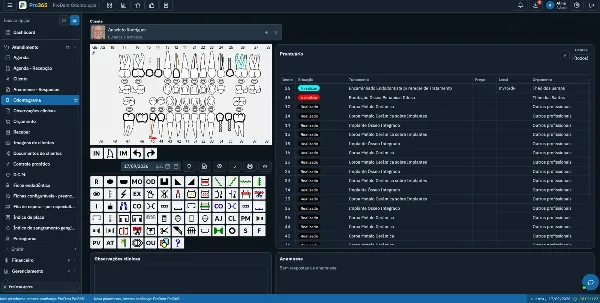
ProDent brings treatment plans, payments, commissions, collections, overdue balance management, management indicators, CRM and patient communication into one platform, along with Pro365 AI, personalized consulting and hands-on support.
That integration helps the clinic keep in one place the parts of the journey that usually fragment. The treatment plan is the starting point, the CRM and contact records preserve continuity, billing follows the agreement and payments, the indicators let you compare periods and situations, and the Pro365 AI Consultant can help answer questions about the data you have.
The gain still depends on management. The system doesn't set prices, margins, discount policy, the right terms, your team's language or which exceptions are acceptable. Personalized consulting and support add value when they help the clinic review the quality of its records, ask better questions, configure the software around its routine and turn analysis into action with a clear owner.
Sustainable growth starts with agreements you can explain and keep
The patient financial experience doesn't improve with a persuasive script. It improves when the clinic knows its limits, explains choices clearly, records what was agreed, cuts repetition and tracks the financial effect of each decision.
That's good patient care, and it's also good management. The clinic keeps trust without improvising, improves the information that reaches billing and learns to tell a communication barrier apart from a real problem with price or ability to pay.
The next step doesn't need to be a big project. Pick one step where agreements tend to lose context, bring the problem to HartSystem's consultants and redesign that handoff with data, an owner and a review date. The goal isn't just to close more treatment plans. It's to build decisions the patient understands and the clinic can deliver on.
With Pro365 GO, the new ProDent that runs 100% on the web, treatment plans, payments and follow-ups stay in the same place for the whole team. Book a demo to see how it fits your clinic.