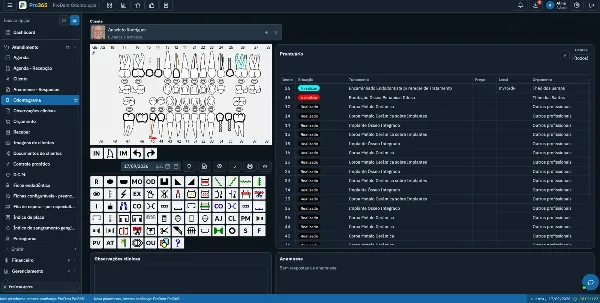

Dental clinic innovation works best when it's simple: find the bottlenecks, start with what has immediate impact, roll out in stages and train the team. Technology is no longer a nice-to-have for clinics that want to grow in a structured way, but it doesn't need to be complicated to deliver results.
Today, clinics that don't keep up with technology run into problems such as:
- slow manual processes
- breakdowns in patient communication
- lost information
- difficulty scaling the business
Meanwhile, clinics that use technology strategically are able to:
- become more productive
- improve the patient experience
- reduce operational errors
- make faster, better decisions
The difference between these two realities lies in how management sees innovation.
The new landscape of modern dentistry
Patient behavior has changed.
Today, patients expect:
- quick answers
- easy scheduling
- digital communication
- organization and professionalism
Competition has also increased.
That means clinics need to be more efficient, more organized and more strategic.
Technology in the dental clinic is an ally in meeting these new expectations.
The World Health Organization notes that digital health can help make health systems more efficient and sustainable, and should support access to quality health services.
Why investing in technology is no longer optional
Ignoring technology can have serious consequences for a dental clinic:
- losing patients to more modern competitors
- constant rework
- low team productivity
- difficulty growing
On the other hand, when applied well, technology lets you:
- automate repetitive tasks
- organize information
- standardize processes
- improve control over operations
In other words, it doesn't replace management. It amplifies it.
Key areas where technology changes the clinic
Technology doesn't act on a single point. It changes the whole operation.
1. Patient service and communication
Digital tools enable:
- automatic appointment confirmations
- reminders
- fast messaging with patients
- fewer no-shows
This directly improves the patient experience.
2. Schedule organization
A well-structured schedule, supported by technology, allows:
- better distribution of appointment times
- less idle chair time
- higher productivity
3. Digital intake forms
Digital intake forms help prevent:
- delays at the front desk
- data entry errors
- rework
They also make information quick to find.
4. Financial control
Technology helps you track:
- money coming in and going out
- overdue patient balances
- revenue forecasts
Without depending on manual spreadsheets.
5. Digital signatures
More security for your documents:
- fully digital
- centralized
How to innovate without complicating operations
A common mistake is assuming innovation has to be complex.
In practice, the best path is to start simple.
Step 1: identify the bottlenecks
Ask:
- Where are we losing time?
- Where do most errors happen?
- What depends too much on manual processes?
Step 2: prioritize what has immediate impact
For example:
- reducing no-shows
- improving the schedule
- organizing finances
Step 3: roll out in stages
Avoid abrupt changes.
The ideal sequence is:
- test
- adjust
- expand
Step 4: train the team
Technology without training doesn't work.
The team needs to understand:
- how to use it
- why to use it
- what they'll gain from it
Step 5: track results
After implementation, review:
- Did productivity improve?
- Did errors go down?
- Did patient service get better?
Common mistakes when adopting innovation in a clinic
Some mistakes can derail the whole rollout:
- trying to digitize everything at once
- not training the team
- choosing tools without a strategy
- not tracking results
- using technology without standardizing processes
Technology doesn't fix disorganization. It amplifies whatever already exists.
Clinic management software as a strategic support
In this landscape, clinic management software plays an important supporting role, not the lead.
It mainly serves to:
- centralize information
- automate processes
- organize the patient flow
- generate reports and KPIs
When properly integrated into the clinic's routine, it connects all the data, from scheduling to finances, making decisions easier and reducing operational errors.
The key point is that software doesn't replace management.
It simply makes management more efficient.
Innovation is about evolving, not about technology
Technology in the dental clinic shouldn't be seen as something complex or distant.
It's really a tool to:
- simplify processes
- improve results
- prepare the clinic for the future
Clinics that adopt technology strategically:
- grow more consistently
- have more control
- offer a better patient experience
With Pro365 GO, the new ProDent that runs 100% on the web, you can bring scheduling, intake forms, finances and signatures into one system, one step at a time. Book a demo to see how it fits your routine.