
Mapping dental clinic workflows means following the patient journey step by step, from first contact to follow-up, to see where things break. Once you can see the real flow, you can spot bottlenecks, set simple standards, document them and train the team to run them the same way every day.
Many owners and office managers deal with a messy schedule, a misaligned team, constant rework and trouble telling whether the clinic is really profitable. These signs aren't always treated at the root, and over time they hold growth back.
Without organized management, the clinic still works, but it depends too much on specific people. That's a risk. With structure, processes and follow-up, everything flows better, from patient care to billing.
What clinic management means day to day
In theory, clinic management can sound complex. In practice, it's about organizing the clinic so everything runs predictably. That means:
- knowing exactly how each process should happen
- making sure the team does it the same way
- reviewing results often
- making decisions based on data
A well-run clinic doesn't depend on memory or improvisation. It runs on standards.
Why disorganization holds growth back
Many clinics believe the problem is attracting patients or revenue. Often, the biggest bottleneck is internal. Without organization, problems like these show up:
- patients who don't come back because of communication gaps
- lost appointments because of poor schedule control
- financial errors from incomplete entries
- trouble seeing what's actually working
The team also starts working reactively, putting out fires instead of improving the process. Structured processes are what break that cycle: they make the work more efficient and cut the cost of rework.
The pillars of an organized clinic
Standardized processes
Everything that happens in the clinic should follow a clear standard. For example:
- how appointments are booked
- how the first visit works
- how treatment plans are closed
- how post-visit follow-up is done
When everyone does things their own way, mistakes become routine.
Clear roles on the team
One of the biggest management mistakes is not defining responsibilities. Each team member needs to know:
- what they're responsible for
- which tasks they do every day
- which results are expected
That prevents conflict and raises productivity.
A structured administrative routine
Management doesn't only happen when there's spare time. It has to be part of the routine, for example:
- checking the day's schedule
- reviewing no-shows and reschedules
- tracking money in and out
- following indicators
Data-driven management
If you don't measure, you don't improve. Management should be guided by numbers such as:
- schedule occupancy rate
- number of appointments completed
- revenue per period
- patient return rate
These numbers show where to act.
How to map and structure your workflows, step by step
1. Map the entire patient journey
Before improving, you need to understand. Look at:
- how patients reach the clinic
- how they're cared for
- how follow-up happens
This reveals hidden failures.
2. Identify the main bottlenecks
Some common examples:
- many no-shows → a problem with confirmations
- low treatment plan acceptance → a weak presentation
- empty days on the schedule → no strategy to fill them
Without identifying the problem, there's no solution.
3. Create simple standards
Keep it simple. Define:
- a script for patient conversations
- standard messages
- a scheduling flow
The goal is consistency.
4. Document the processes
Everything should be written down, for example as:
- a checklist
- an internal manual
- a patient flow chart
That makes training and standardization easier.
5. Train the team continuously
Creating processes is pointless if nobody learns them. Training should be:
- practical
- frequent
- tied to the daily routine
An aligned team executes better.
6. Review and adjust constantly
Management isn't fixed. The clinic changes, the market changes, patients change. So review:
- processes
- results
- team performance
Indicators that show your workflows are working
Efficient management shows up in the numbers. The main indicators to track are:
- no-show rate
- schedule occupancy rate
- monthly revenue
- average revenue per patient
- number of returning patients
These numbers show whether the clinic is evolving or stalled.
Mistakes that keep a clinic from improving
Some mistakes are very common, and dangerous:
- having no defined processes
- relying only on the team's experience
- not tracking indicators
- not reviewing routines
- not using data to decide
How technology supports your workflows
Technology doesn't replace management, but it makes it much easier. Digital tools help you:
- organize the schedule and avoid conflicts
- automate reminders and confirmations
- track indicators in real time
- centralize the clinic's information
Combining appointment reminders and confirmations, for example, directly helps organize the schedule, reduce no-shows and make each day more predictable.
Features such as:
- digital intake forms
- a CRM to follow up with patients
- management indicators
- automated messages
let the clinic run with more control and less operational effort. The key point: software supports management. It isn't a standalone solution.
Start by mapping what already happens
Clinic management turns an ordinary clinic into a structured business. With well-defined processes, an aligned team and regular review of results, the clinic gains predictability, efficiency and the confidence to grow. The first step isn't complicated: map what already happens in your day-to-day and fix one bottleneck at a time.
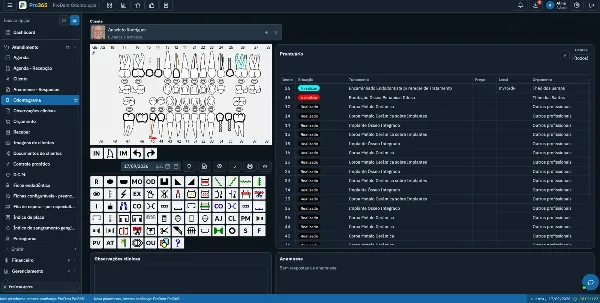
Pro365 GO, the new ProDent that runs 100% on the web, brings the schedule, intake forms, CRM and indicators into one place, so each step of the patient journey is visible. Book a demo to see it applied to your workflows.