Dental clinic KPIs are the metrics that show how your clinic is really performing, from profit and schedule utilization to no-shows and accepted treatment plans. They turn management based on assumptions into management based on real data, and they help you grow with predictability.
Many owners and office managers still make decisions on instinct, without clear numbers. That leads to uncertainty, waste and limited growth. Today, technology gives you accurate information in real time, which makes it much easier to stay in control.
What this guide covers
- What dental clinic KPIs are
- Why your clinic needs them
- The main types of KPIs to track
- How to use the data in practice
- The role of technology in analyzing data
- Common mistakes with KPIs
What dental clinic KPIs are
Dental clinic KPIs are metrics that show the real performance of the business.
They help answer questions like:
- Is the clinic profitable?
- Is the schedule full or idle?
- Is the team productive?
- Are there too many no-shows?
Without this data, you're managing in the dark.
Why your clinic needs KPIs
First, KPIs bring clarity.
Without them, you might:
- Think you're growing when you're not
- Miss losses
- Overlook operational bottlenecks
With well-defined KPIs, you can:
- Identify problems quickly
- Make safer decisions
- Improve results continuously
The main types of dental clinic KPIs
Financial KPIs
- Monthly revenue
- Net profit
- Average ticket
- Past-due patient balances
Scheduling KPIs
- Utilization rate
- Number of no-shows
- Reschedules
Productivity KPIs
- Visits per provider
- Average time per procedure
- Production by specialty
Conversion KPIs
- Accepted treatment plans
- Leads converted into patients
How to use dental clinic KPIs in practice
1. Decide what to track
Not everything needs to be measured. Start with the essentials:
- Finances
- Schedule
- Conversion
2. Review them regularly
Next, create a routine:
- Daily: schedule and visits
- Weekly: productivity
- Monthly: finances
3. Analyze and decide
Data without action is worthless. A practical example:
- Too many no-shows → put an appointment confirmation process in place
- Low conversion → review how treatment plans are presented to patients
The role of technology in KPI management
Tracking KPIs by hand is no longer realistic. Modern solutions let you:
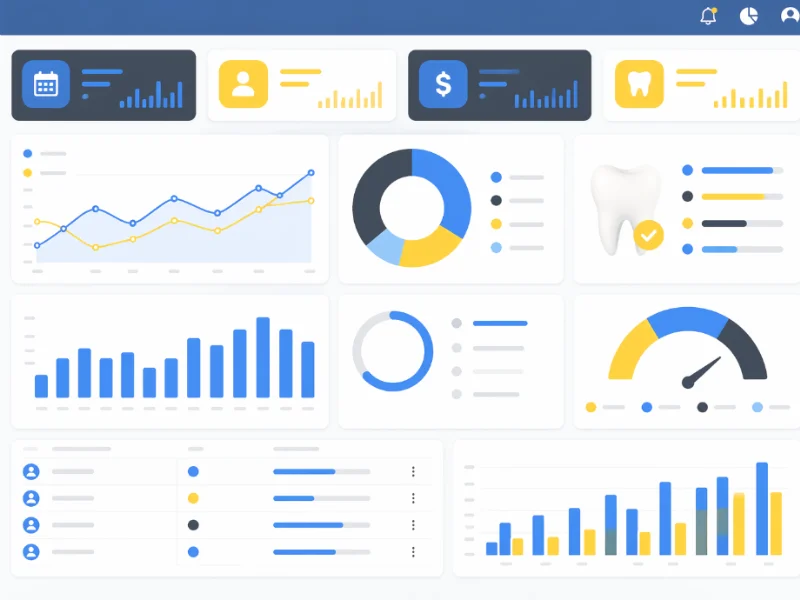
- See data in dashboards
- Follow results in real time
- Automate reports
Software with artificial intelligence can already help interpret this data. With an assistant built into the system, you can ask questions like:
- "How many patients did we see this week?"
- "How many treatment plans are still open?"
And get immediate answers based on the clinic's own data. That reduces errors and speeds up decisions.
Common mistakes with KPIs
Tracking too many irrelevant numbers
Focus is essential.
Not acting on the data
A KPI without action is useless.
Lack of consistency
Looking at the numbers once in a while isn't enough. The review rhythm only works if it's kept.
Side by side: with and without KPIs
A clinic without KPIs
- Decisions based on guesswork
- Lack of control
- Unstable growth
A clinic with well-defined KPIs
- Strategic decisions
- More financial control
- Predictable growth
KPIs are how a clinic moves from improvising to managing
Dental clinic KPIs are essential for anyone who wants to stop improvising and take control of the business. They bring clarity, confidence and direction. With well-structured data, your clinic stops just operating and starts growing strategically.
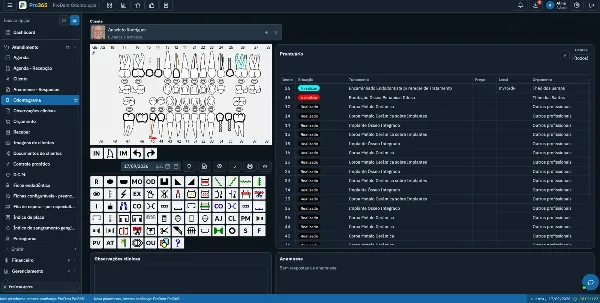
With Pro365 GO, the new ProDent that runs 100% on the web, your KPIs live in real-time dashboards, and the Pro365 AI Consultant answers questions about your clinic's data. Book a demo to see all your clinic's KPIs in one place.